Where Electronics Really Begins
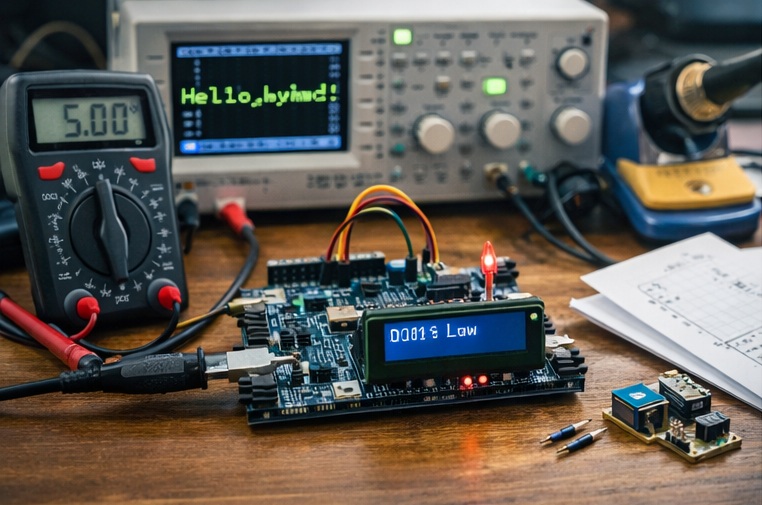
Today, starting your journey in electronics is easier than ever before.
All it takes is opening a video platform, finding a ready-made project, or downloading a sample piece of code — and within a few hours you can assemble a device based on Arduino, connect a sensor, a display, or a relay, and see a working result.
It’s convenient.
It’s inspiring.
And it truly lowers the barrier to entry.
Modern development platforms have made electronics accessible to students, hobbyists, and anyone curious about technology. Not long ago, working with microcontrollers required significantly more preparation: designing a schematic from scratch, manufacturing a printed circuit board, building a programmer, and studying detailed chip documentation.
Today, many of these elements are already integrated into a single board — power supply, communication interfaces, basic support circuitry, and programming tools.
This is a major step forward.
But along with easier access, another trend has emerged: electronics is increasingly reduced to connecting ready-made modules by following instructions.
The device works.
The code uploads.
There’s a visible result.
But an important question remains — what is actually happening inside?
Tool vs. Understanding
Platforms like Arduino are tools.
Good, convenient, and well-designed tools.
However, any tool becomes truly powerful only when accompanied by understanding.
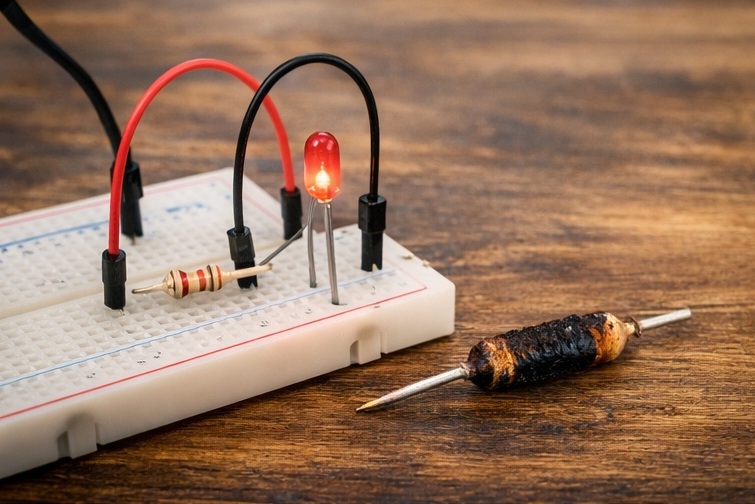
If you connect an LED according to a diagram found online — it will light up.
If you wire a display following a tutorial — it will show data.
But why was that particular resistor value chosen?
Why can’t you connect the LED directly to the power source?
Why can a small wiring mistake damage the entire circuit?
Without understanding current, voltage, power, and the operating principles of components, electronics turns into a construction kit made of prebuilt blocks. Functional — but not necessarily understood.
And without understanding, it’s difficult to grow beyond repetition.
True comprehension allows you not only to replicate projects, but to analyze them, calculate parameters, and design your own solutions.
Repetition Is a Stage — Not the Destination
Reproducing existing projects is a natural and valuable stage of learning.
Through repetition, you gain hands-on experience, improve precision, and become comfortable with measurement tools and basic components. You learn how to read schematics and follow logical assembly steps.
But if learning stops at copying, limitations appear.
You can build what others have already built.
You can replicate published designs.
But creating something original becomes difficult.
Innovation requires understanding.
To modify a circuit, you must know how it works.
To substitute a component, you must understand its parameters.
To troubleshoot a fault, you must know where to look.
And this inevitably brings us back to the fundamentals.
The Foundation of Every Circuit
Behind every electronic board — whether it’s a microcontroller, a power supply, a household appliance, or industrial equipment — lie the same physical principles.
Current.
Voltage.
Resistance.
Power.
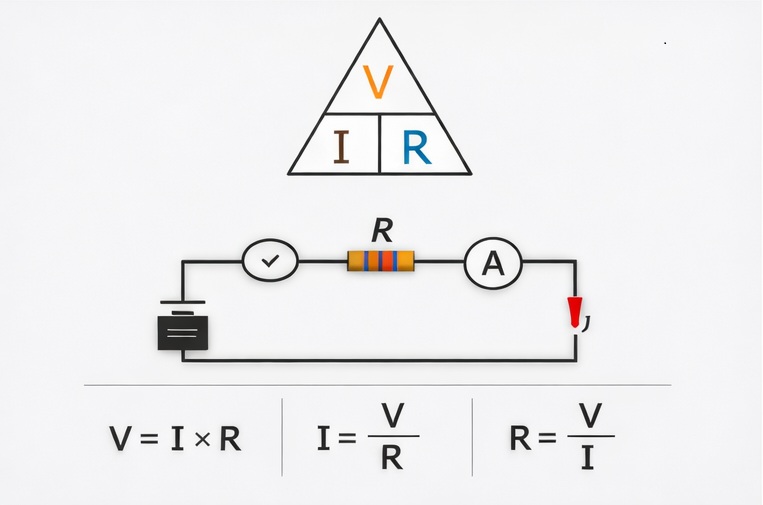
Ohm’s Law.
Semiconductor behavior.
Without these concepts, it’s impossible to truly understand why a circuit operates the way it does.
A microcontroller does not “control” a device in some magical way. It simply generates signals that influence current and voltage within a circuit. Changes in these electrical quantities produce real physical effects — a motor spins, a heating element warms up, a relay switches, or a signal is transmitted.
Electronics is not magic.
It is physics applied in practical form.
When you begin to see it this way, circuits stop being “black boxes.” They become logical systems of interconnected elements.
Why a Step-by-Step Approach Matters
In technology, rushing rarely leads to good results.
Especially in electronics.
An incorrectly calculated current can cause overheating.
Improper voltage selection can destroy a component.
Ignoring power ratings can damage an entire device.
A structured approach is not just formality — it’s essential.
First, understand the fundamentals.
Then apply them in simple circuits.
Only afterward move to more complex systems and microcontrollers.
This path may seem slower at first. But in the long term, it provides far greater freedom.
You gain the ability to modify circuits confidently.
Design your own devices.
Approach repairs without fear.
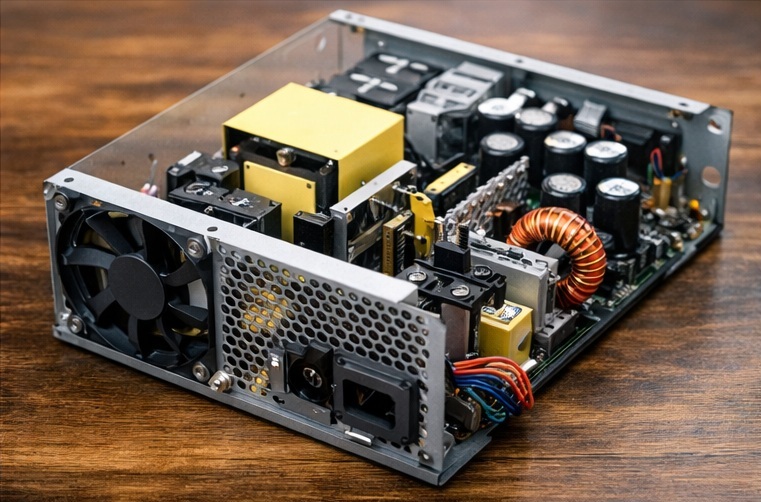
When you understand how an electric kettle, a power supply, or a charger works, many failures stop feeling intimidating. Curiosity replaces uncertainty.
Why This Resource Exists
This resource was created from a simple observation:
there are countless ready-made projects online, but not always clear and structured explanations of the fundamentals.
The goal here is not to overcomplicate the material or turn every topic into an academic lecture filled with formulas. At the same time, the approach will not be superficial.
We will explore electronics step by step:
- what electricity really is and how it behaves in a circuit;
- the difference between voltage and current;
- why a resistor limits current;
- how a diode and a transistor function;
- what happens inside a power supply;
- how to calculate parameters for a simple circuit.
The main focus is understanding.
When you understand, tools become more effective.
Projects become intentional.
Working with technology becomes more confident.
Who This Site Is For
This resource is designed for learners at different levels.
If you are just starting, you will find a structured foundation to build upon.
If you already have experience, you can revisit devices from the perspective of fundamental principles and deepen your knowledge.
If you are interested in the history of technology, there will also be a section dedicated to the people whose discoveries shaped modern electronics.
Some come for inspiration.
Some for practical knowledge.
Some for theory.
What unites everyone is the desire to understand how the technology around us works.
Where We Begin
We begin with the basics.
Calmly and systematically, we will explore:
- what electricity is,
- how current and voltage are related,
- why power matters,
- how simple laws form the foundation of complex systems.
Gradually, we will move toward practical circuits, real-world devices, and microcontrollers — with a clear understanding of what is happening behind the scenes.
Because electronics does not begin with code.
It begins with understanding.
And that is exactly where we start.
Continue Your Journey
If you’d like to go further:
🔧 Devices — analysis of real circuits and equipment.
📘 Education — structured materials on electronics fundamentals.
💬 Forum — questions, discussions, and shared experience.
Welcome to the world of conscious electronics.