1 month ago
•
Education
Admin
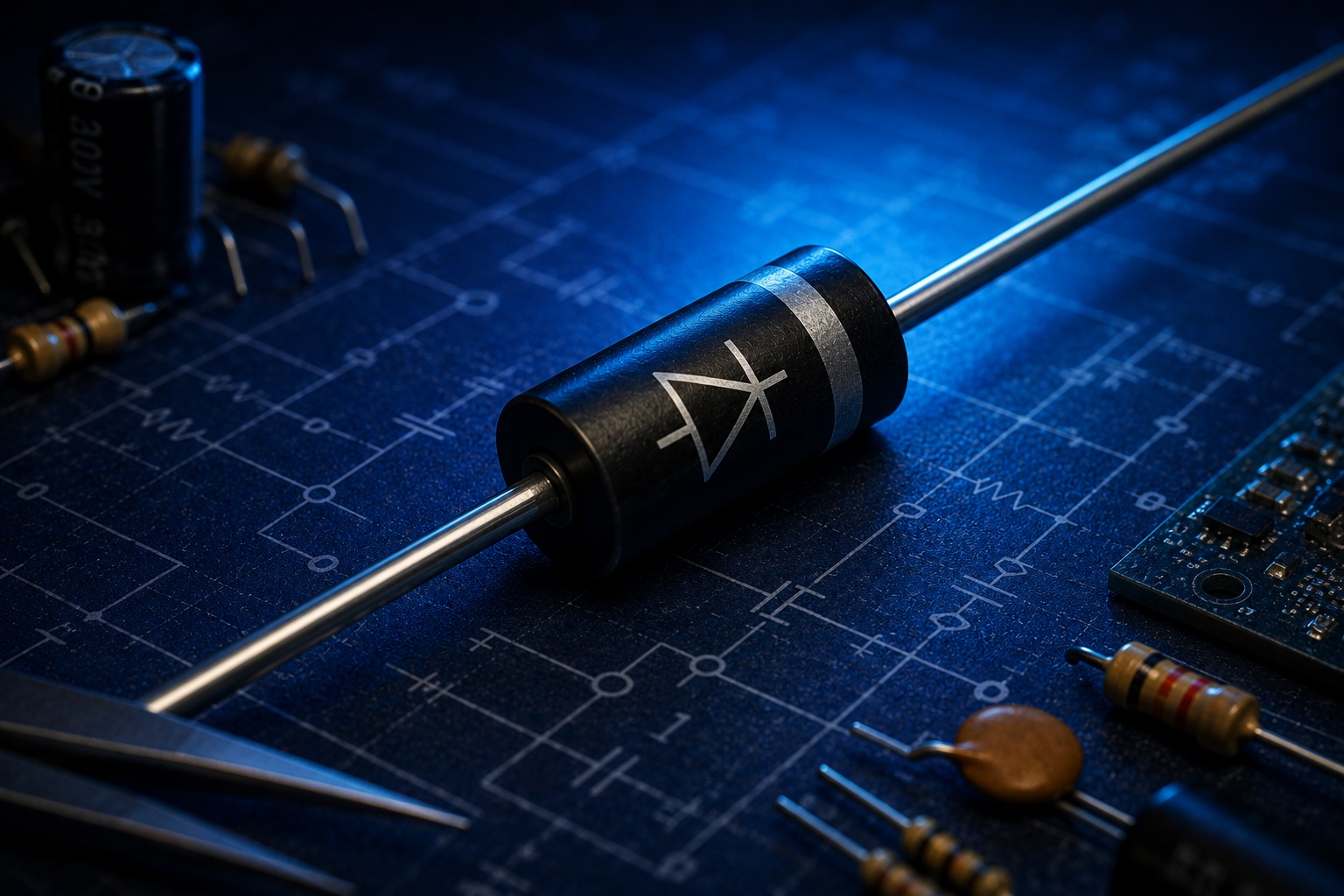
A diode is one of the most common components in electronics. Its main feature is that it allows electric current to flow primarily in one direction. Because of this, diodes are used to protect electronic circuits, convert AC voltage into DC, automatically select between power sources, and perform many other tasks. In this article, we will learn how a diode works, how to identify its terminals, and why it has such useful properties.
2 months ago
•
Education
Admin
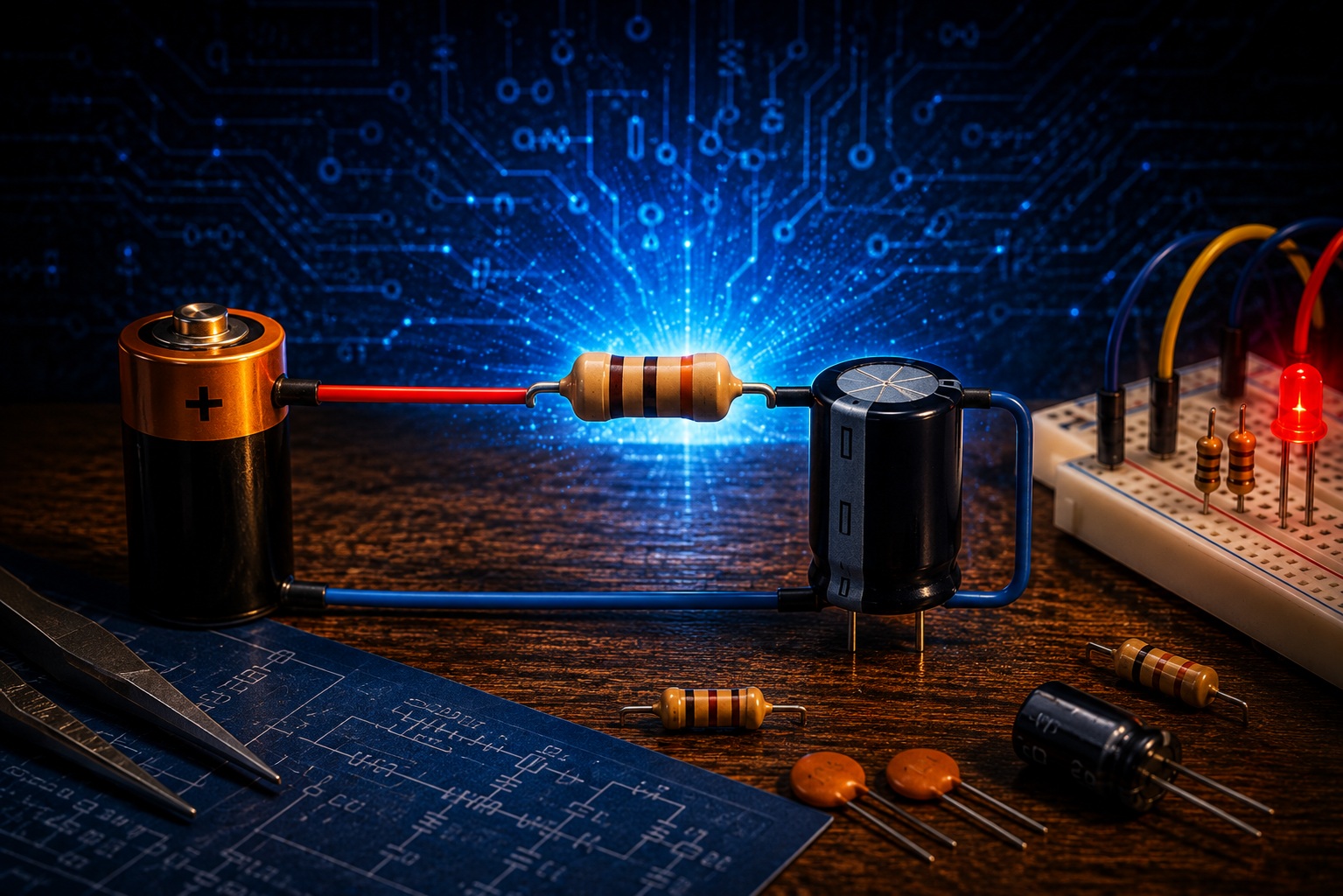
In the previous lesson, we learned about capacitors and carried out a simple experiment. After disconnecting the power supply, the LED continued to glow for a few seconds. Why did this happen? In this article, you will learn what an RC circuit is, how a resistor and a capacitor work together during charging and discharging, and how to calculate the RC time constant.
2 months ago
•
Education
Admin
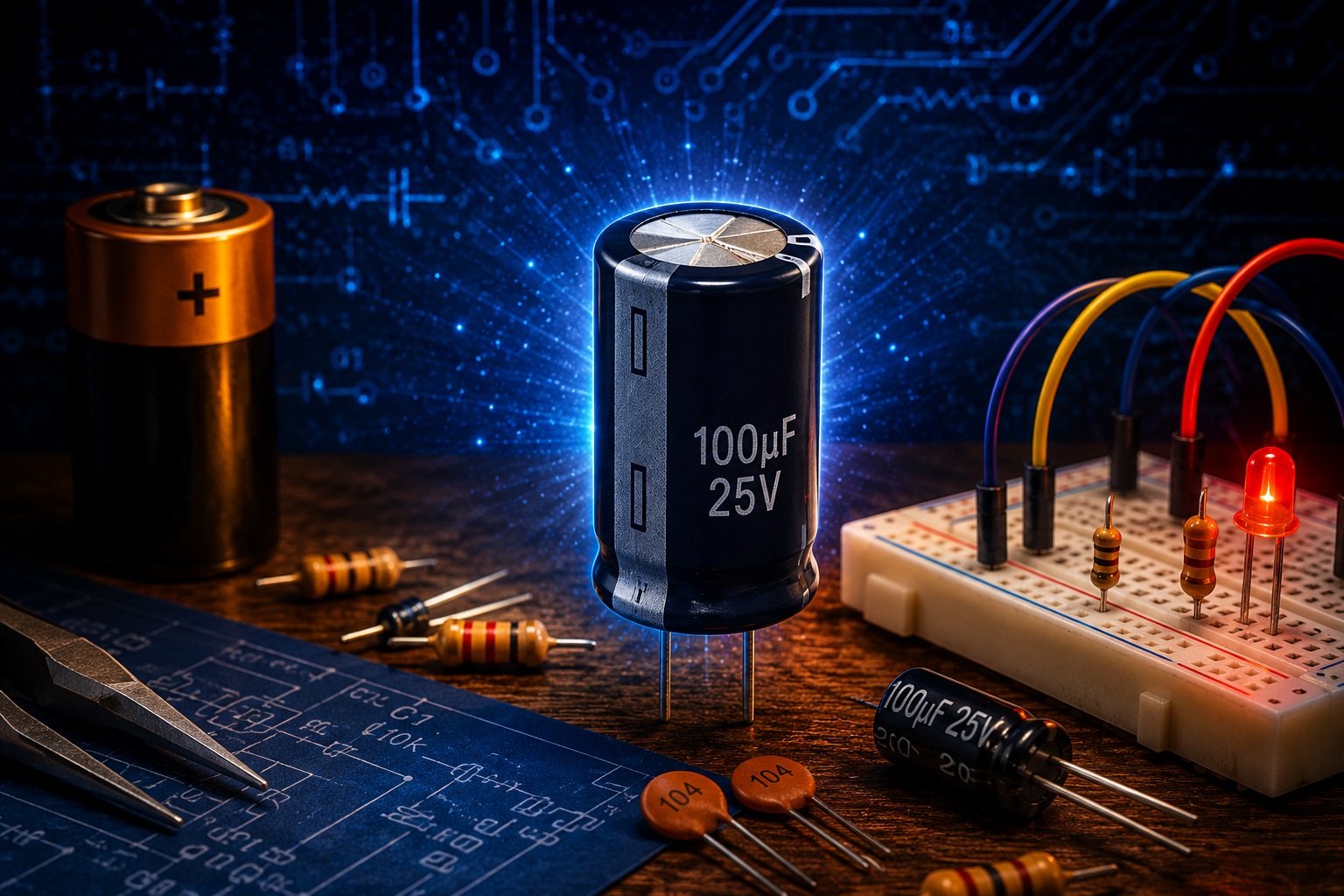
A capacitor is one of the most common components in electronics. It stores electrical energy, smooths voltage fluctuations, filters signals, and is used in almost every electronic device. In this article, you'll learn how a capacitor works, what types of capacitors exist, and perform a simple experiment to see a capacitor in action.
4 months ago
•
Education
Admin
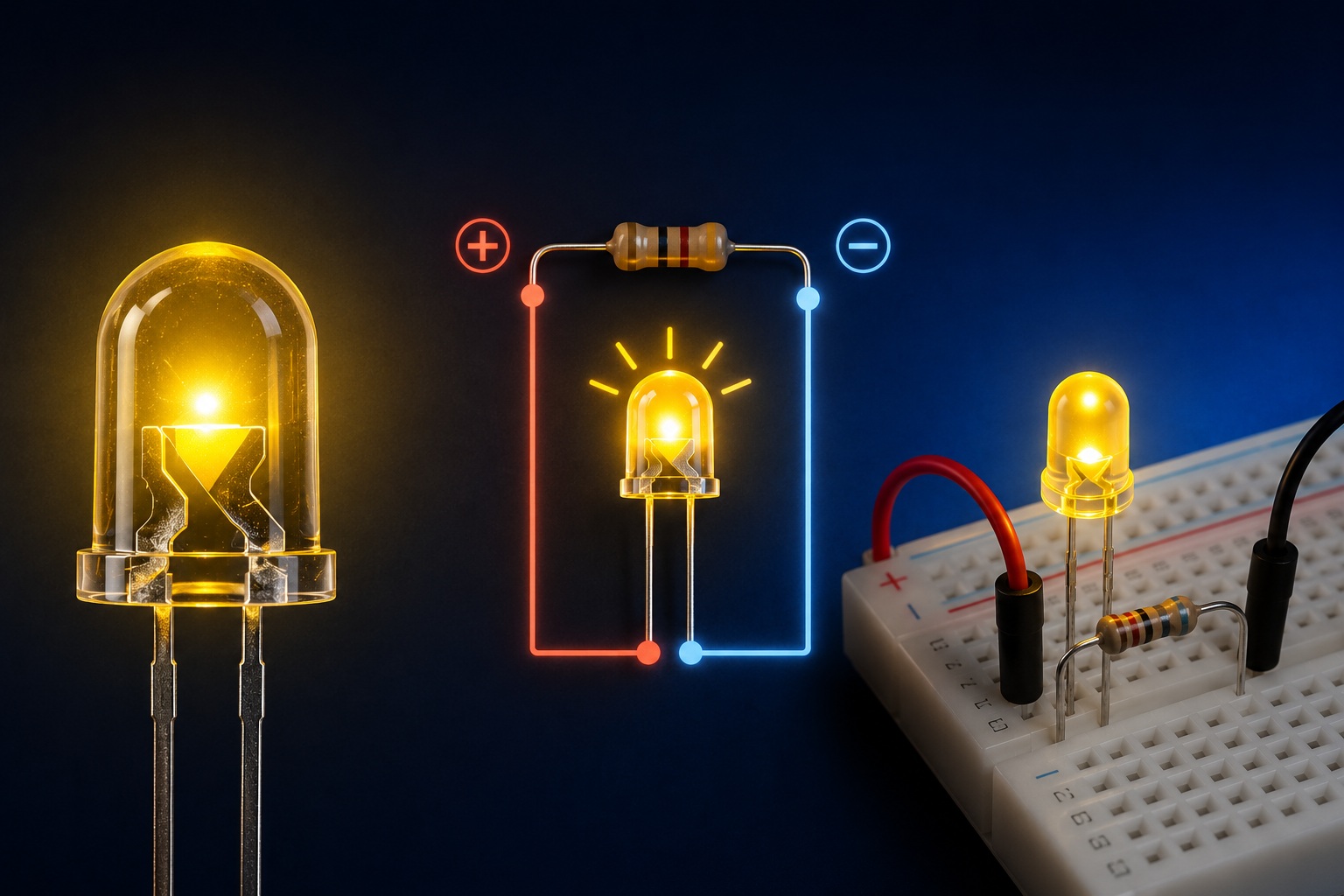
LEDs are used in almost all modern electronics: computers, TVs, cars, flashlights, home appliances, and even street lighting.
In this lesson, we will learn what an LED is, how it differs from a regular light bulb, how to connect it correctly, and why an LED can burn out without a resistor.
4 months ago
•
Education
Admin
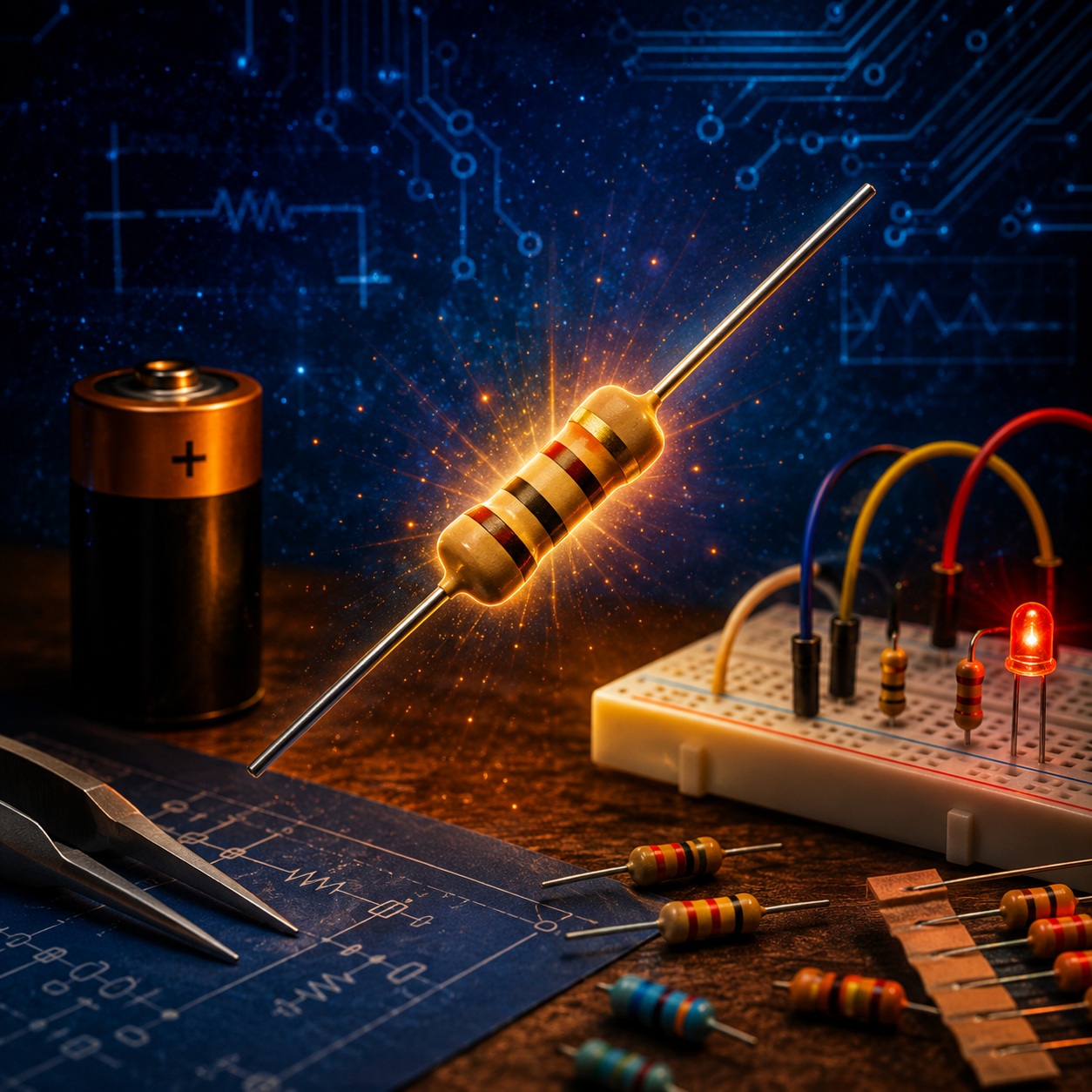
A resistor is one of the most common components in electronics.
It is used in almost every device: from LEDs and power supplies to microcontrollers and transistor circuits.
In this lesson, we will learn what a resistor is, why it is needed, what resistance means, and why modern electronics would be impossible without resistors.
5 months ago
•
Education
Admin
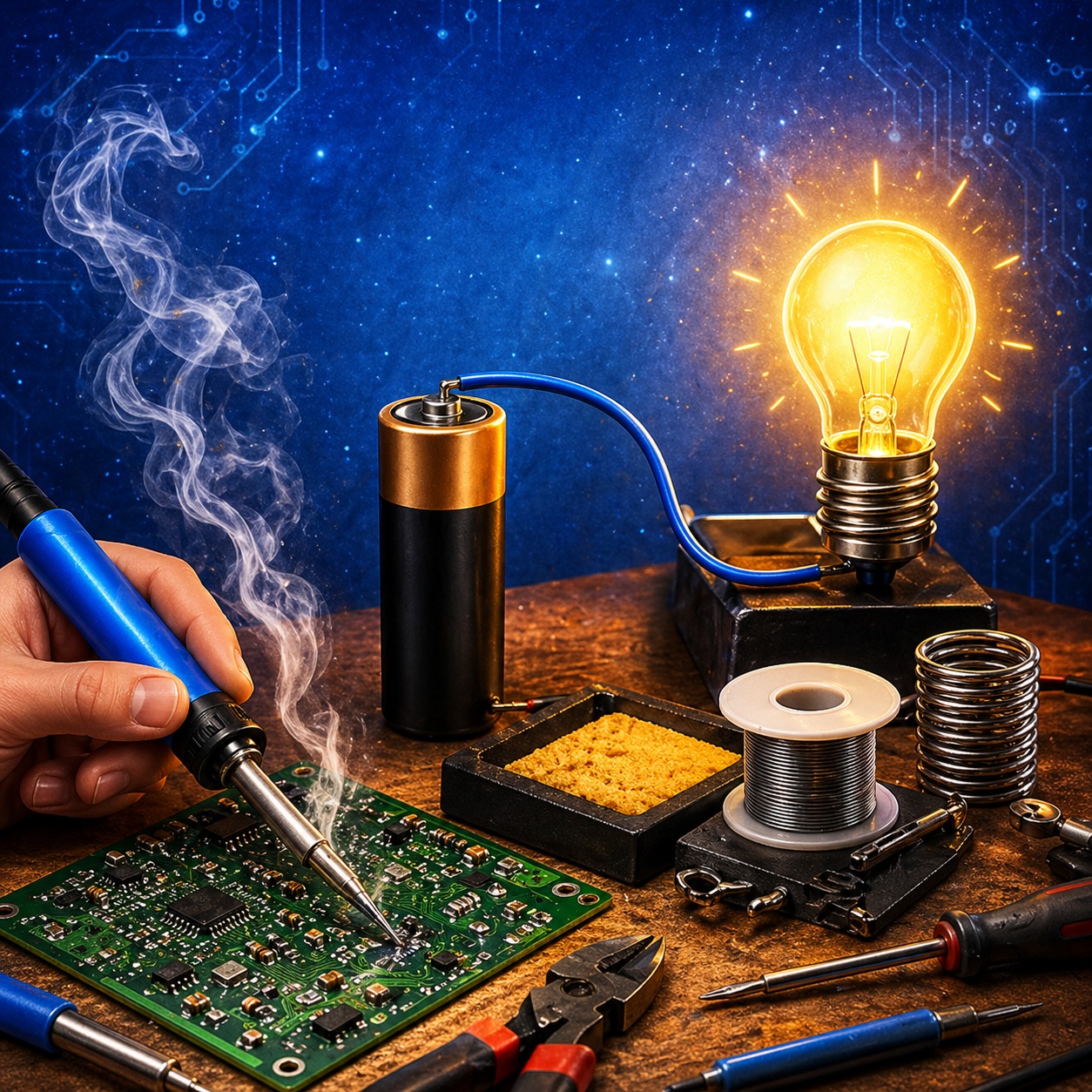
In this article, we will build the simplest electrical circuit: a battery, wires, and a light bulb. Using this example, you will understand what a power source is, what a closed circuit is, and why electric current makes a light bulb glow.
5 months ago
•
Education
Admin
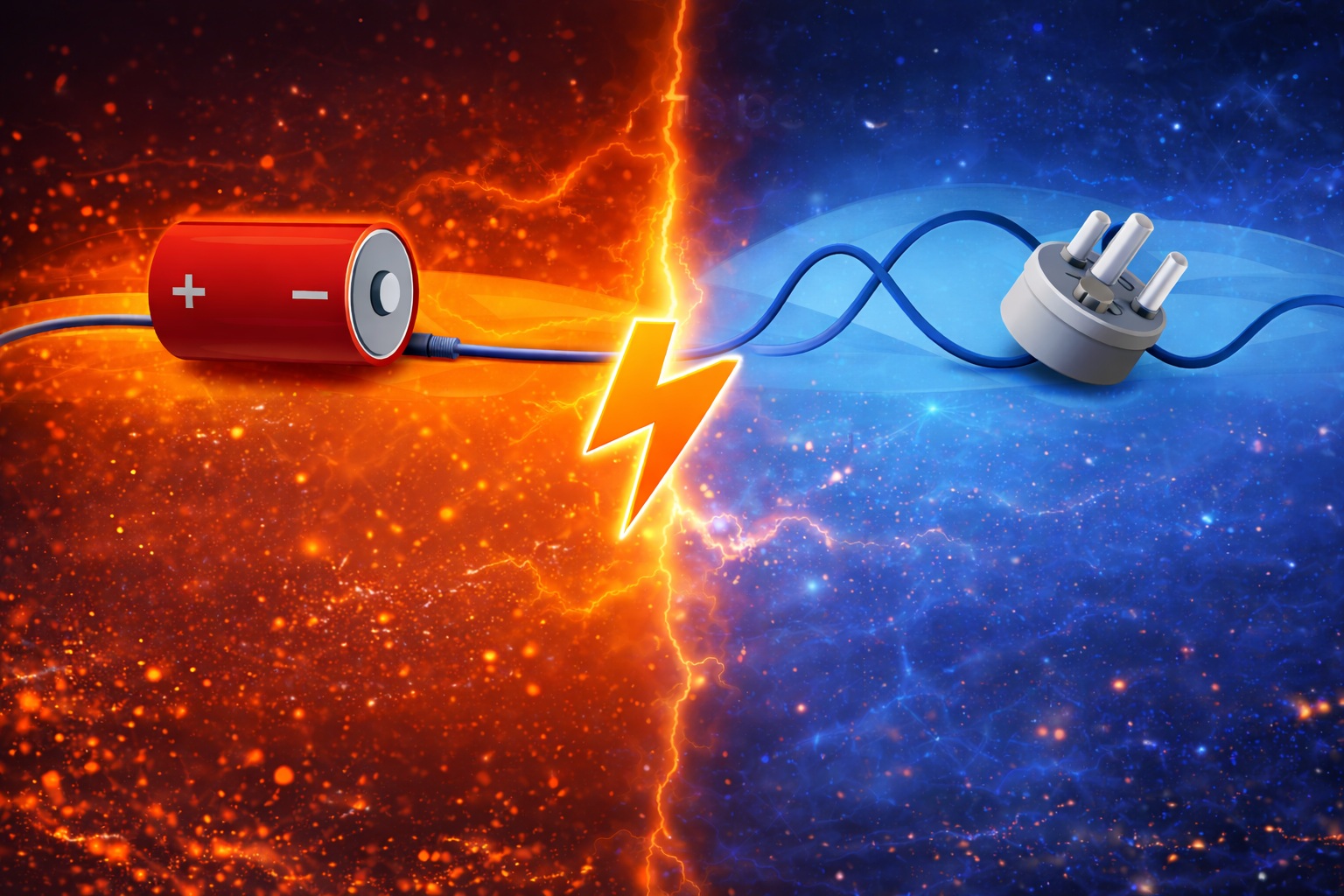
Why is the current from a battery different from the one in a wall outlet?
What is alternating current, and why is it used in power systems?
In this article, we explain the difference between direct current and alternating current, how they work, and where they are used. You will understand why electronics rely on DC, while power grids use AC.
5 months ago
•
Education
Admin
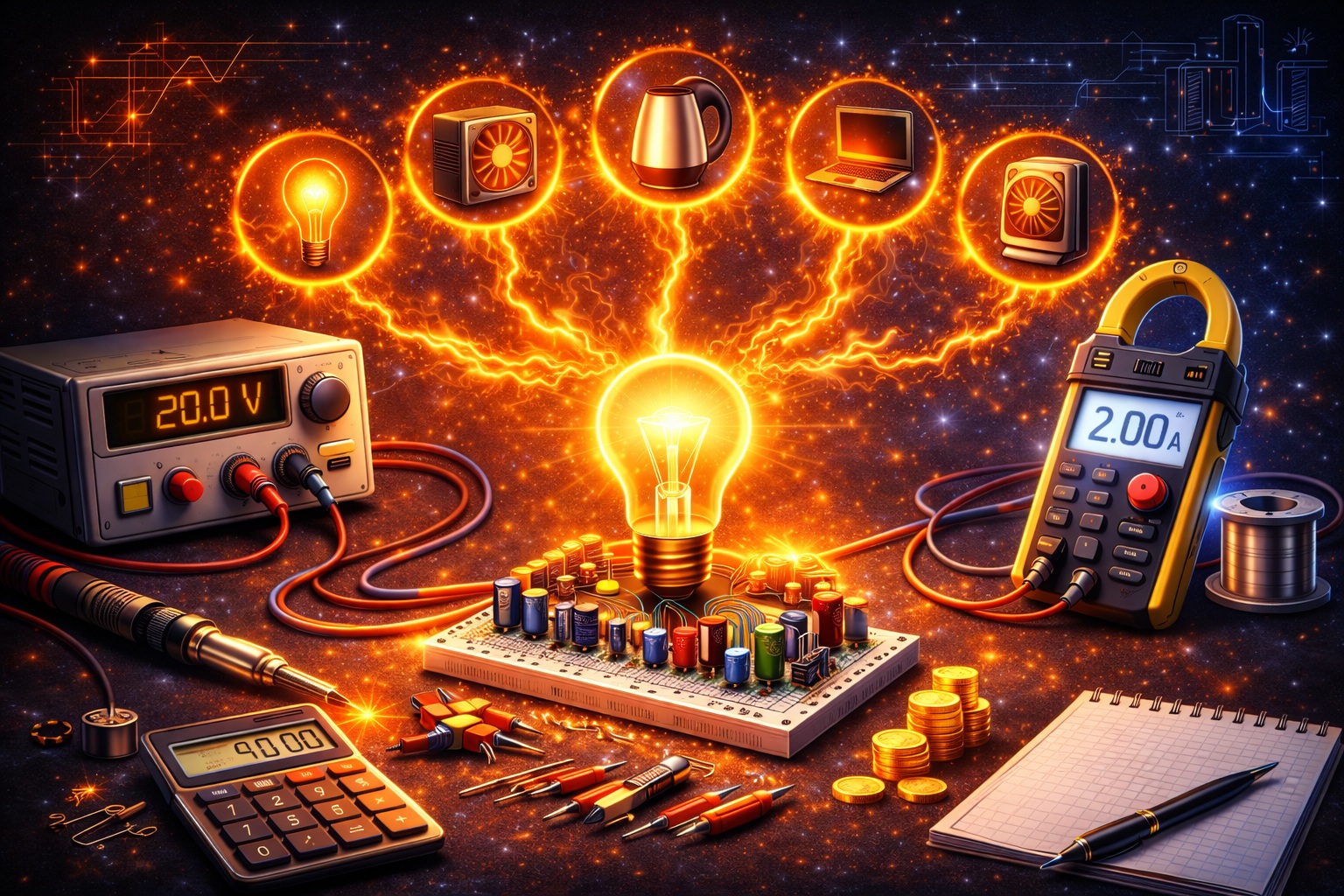
Why do some devices consume more energy than others?
What determines power, and how can we calculate it?
In this article, we explain what electrical power is, how it relates to voltage and current, and why it determines energy consumption. You will learn how to calculate power using simple examples and understand its role in real-world applications.
5 months ago
•
Education
Admin
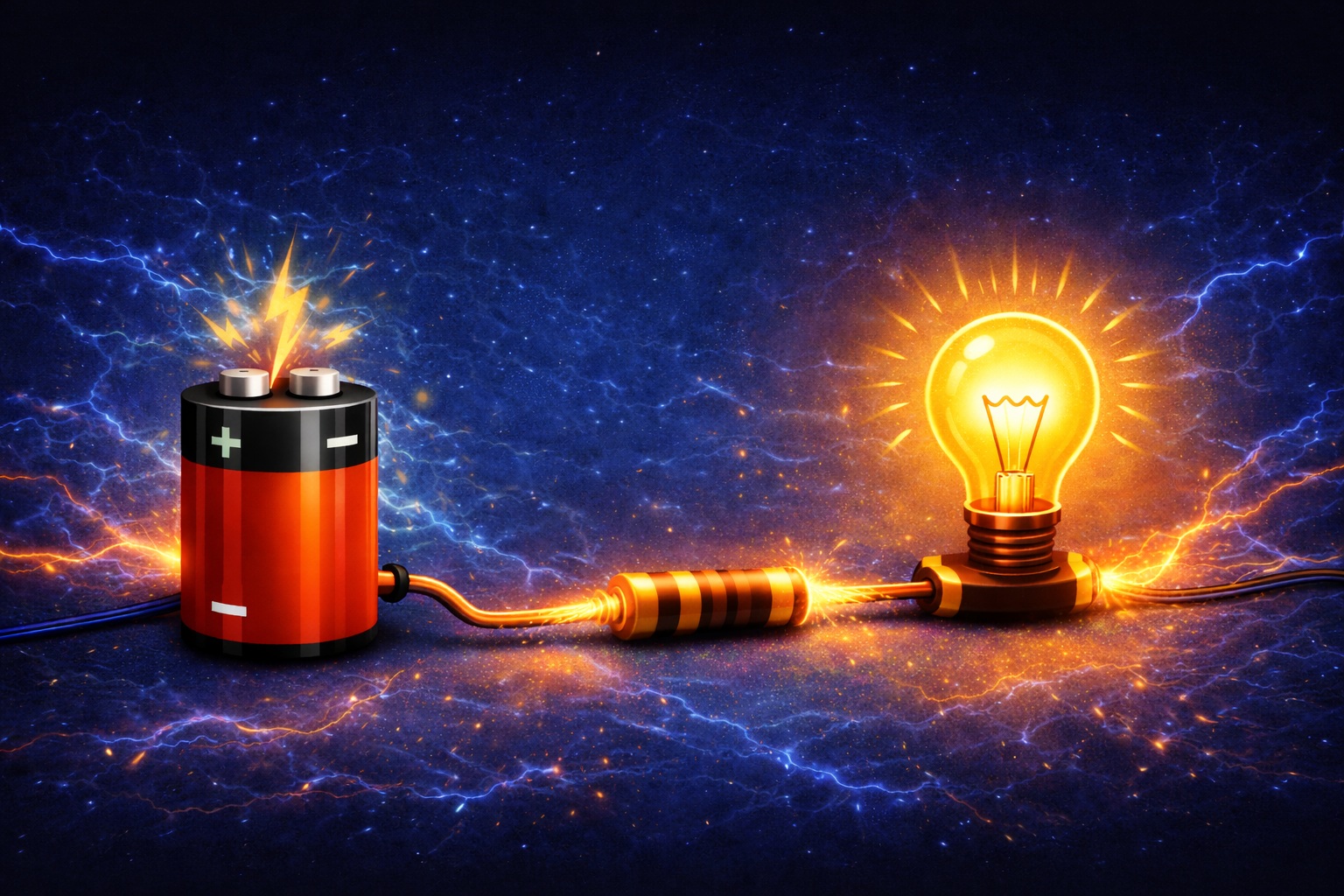
How are voltage, current, and resistance related?
Why does changing one parameter affect the entire circuit?
In this article, we explain Ohm’s Law — one of the most important principles in electronics. You will learn how electrical circuits are calculated, what determines current, and how this law applies to both simple and more complex systems.
5 months ago
•
Figure
Admin
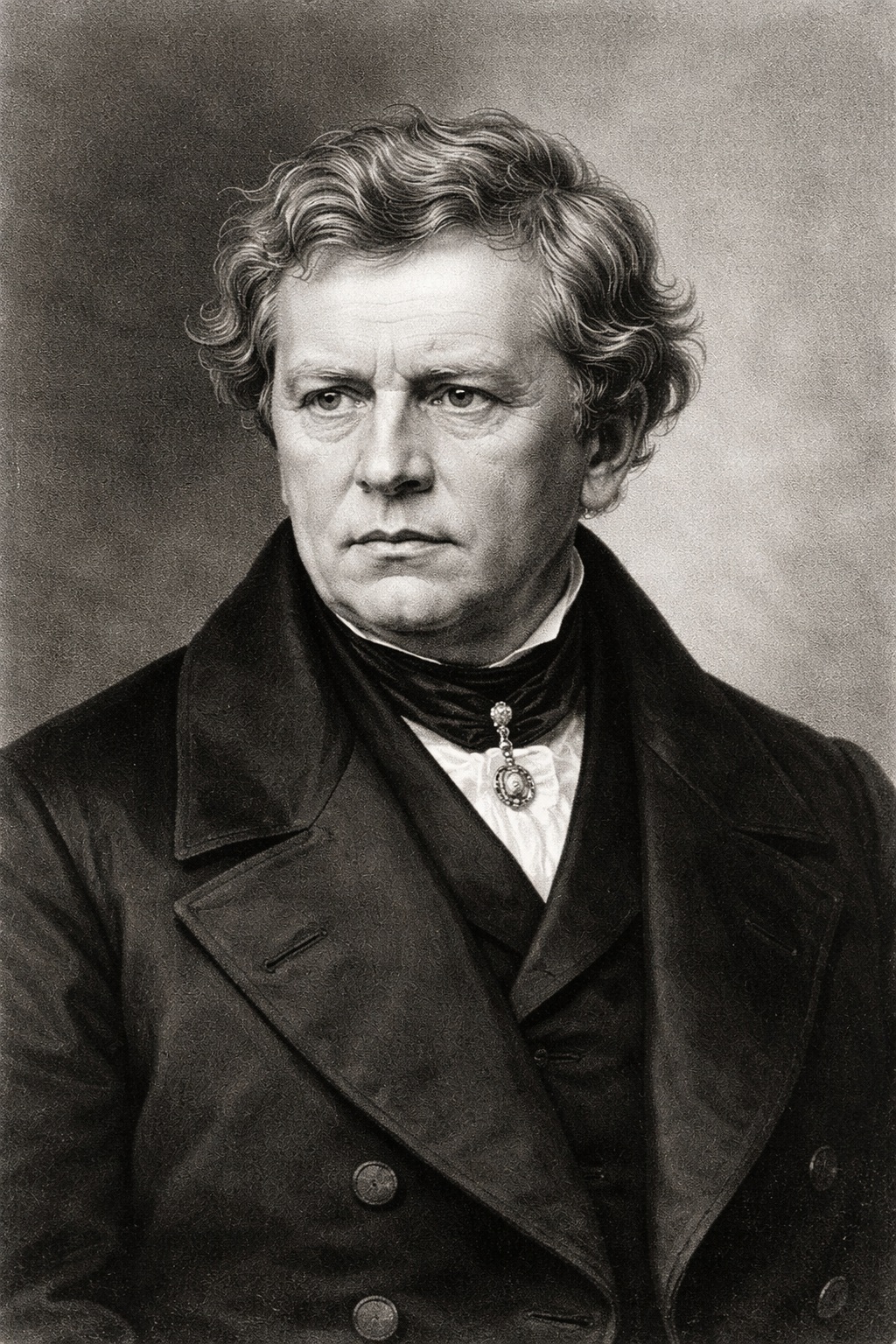
1789 — 1854
Electrical Quantities, Direct Current (DC), Electrical Circuits, Measurement Technology
Georg Ohm was the scientist who first described the precise relationship between voltage, current, and resistance. His law became the foundation of modern electrical engineering. Let’s explore how a simple equation changed the way we understand electric circuits.
5 months ago
•
Education
Admin
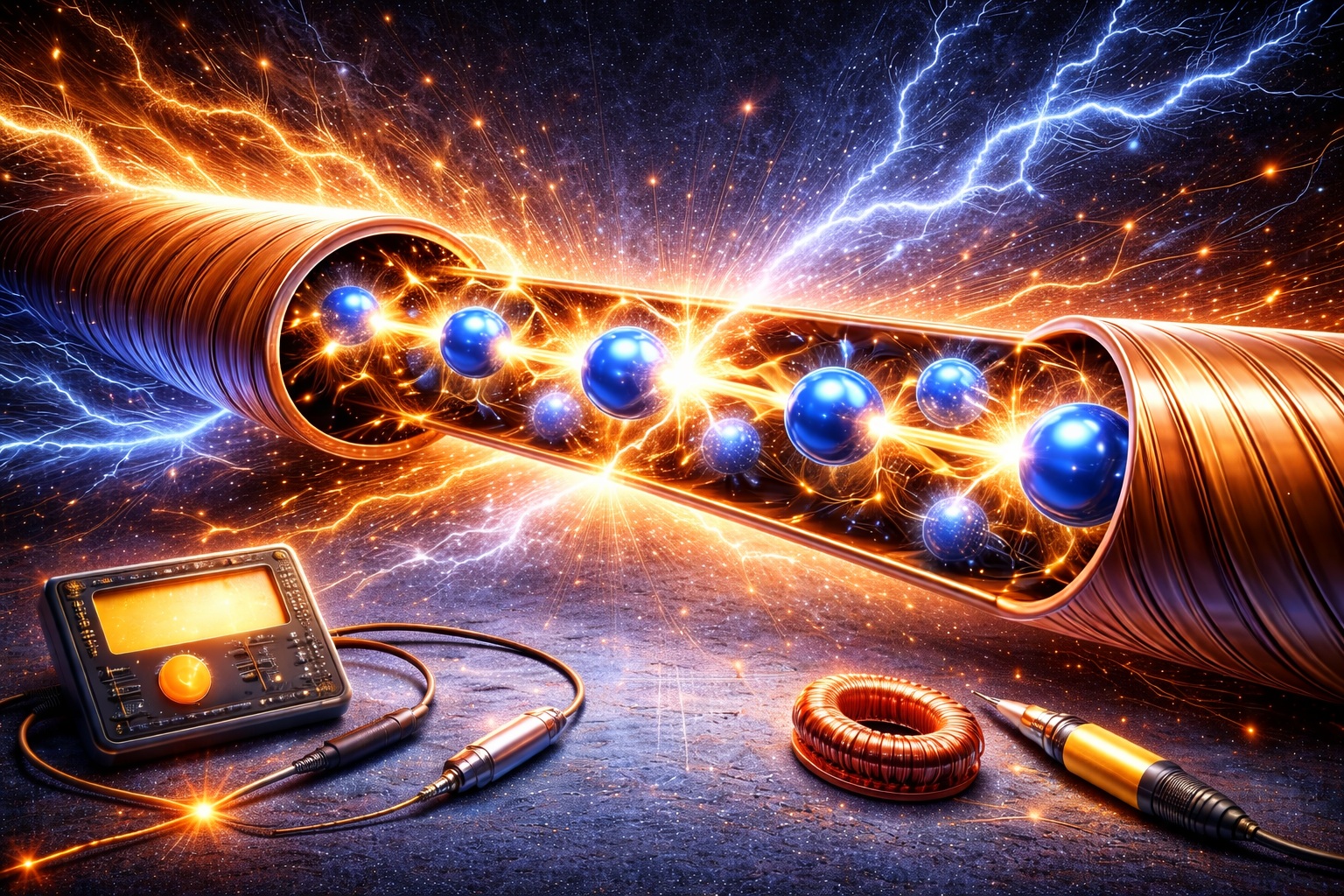
Why can’t electric current increase infinitely?
What prevents electrons from moving freely inside a conductor?
In this article, we explain what electrical resistance is, why it exists, and how it affects the movement of charges. You will learn what resistance depends on, why wires heat up, and how it influences electrical circuits.
6 months ago
•
Article
Admin
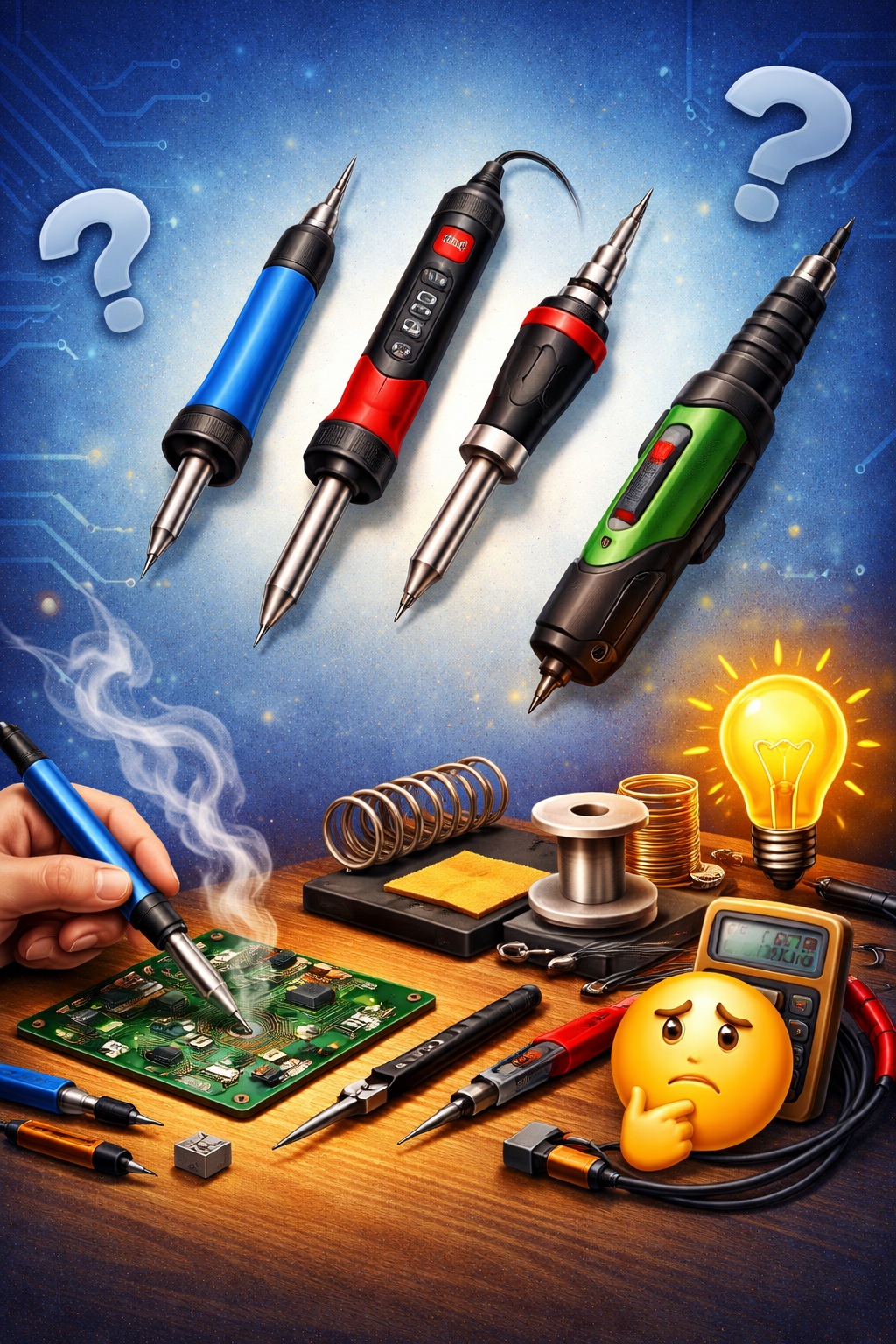
Which soldering tool should a beginner choose: a basic soldering iron, a temperature-controlled one, or a full soldering station?
In this article, we break down the real differences, compare their pros and cons, and help you choose the right tool to get started with electronics.
6 months ago
•
Education
Admin
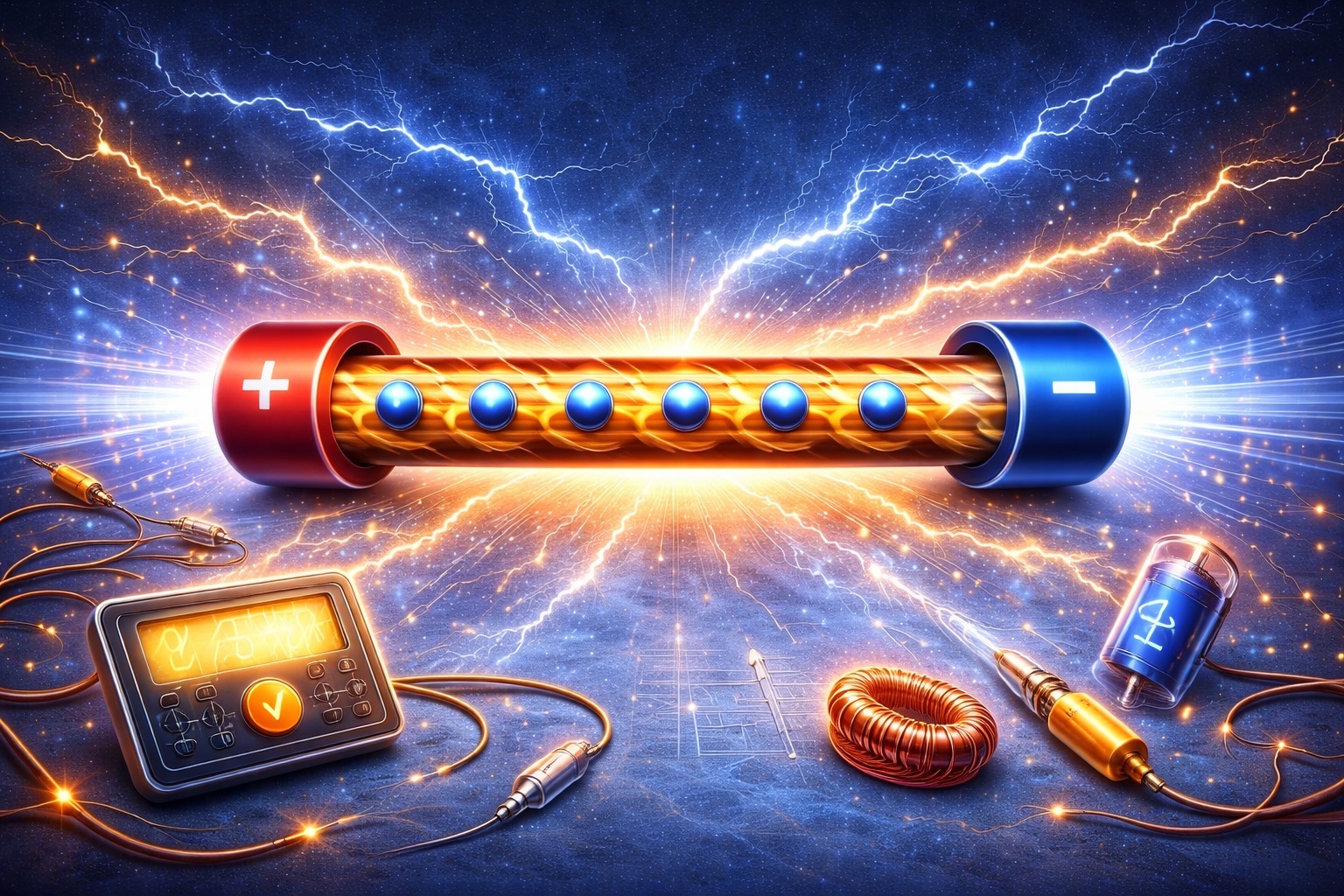
Why do electrons start moving inside a wire?
What actually creates the force that makes electric current flow?
In this article, we explain what voltage is, how it relates to potential difference, and why electric current cannot exist without it. You will understand the role voltage plays in every electrical circuit and how it is connected to energy transfer.
6 months ago
•
Education
Admin
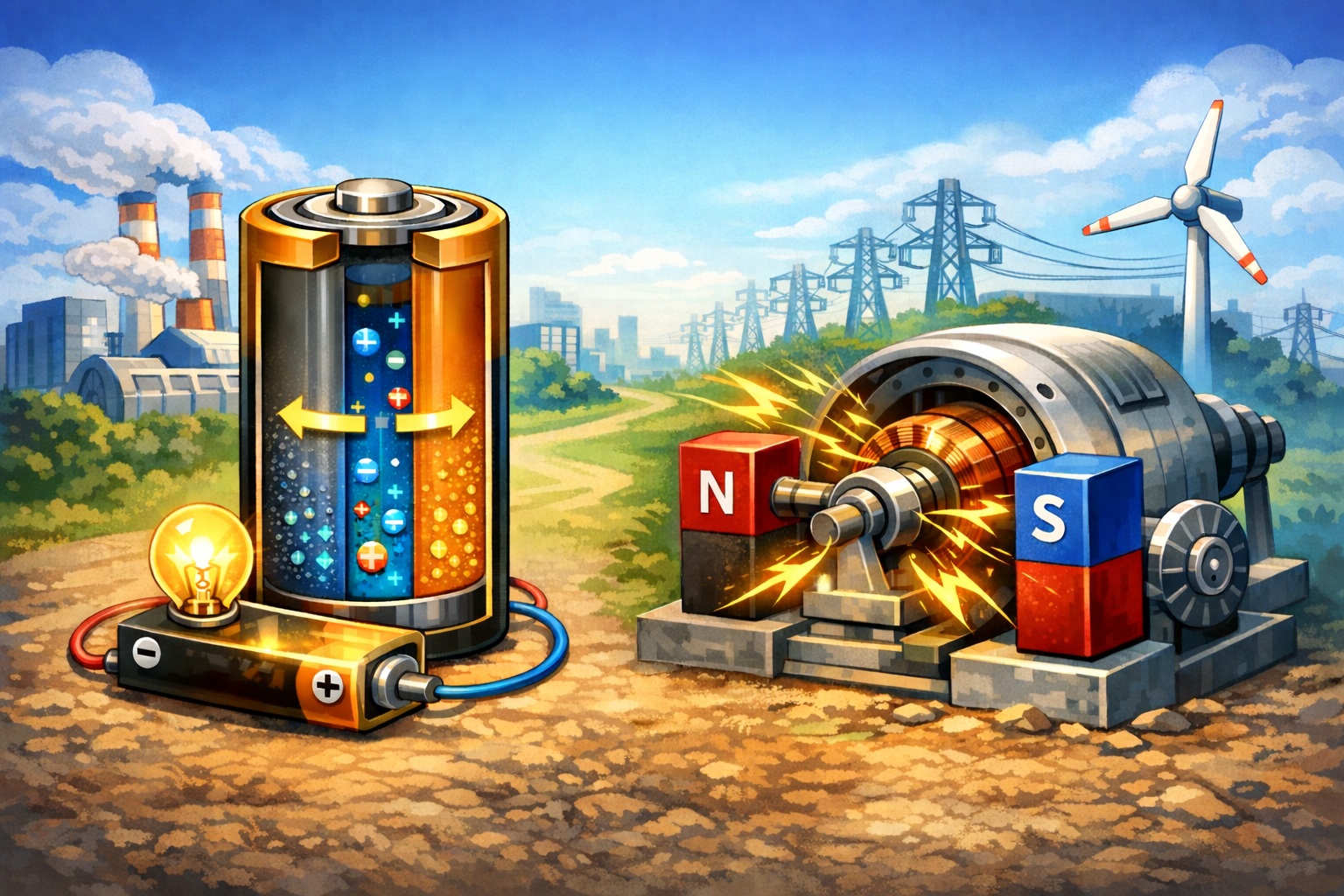
Why can a small battery power a flashlight, while huge power plants supply electricity to entire cities?
Where does electrical energy actually come from and what devices are able to produce it?
In this article, we will explore how sources of electricity work, why batteries generate electric current through chemical reactions, and how generators convert mechanical energy into electrical energy.
6 months ago
•
Figure
Admin
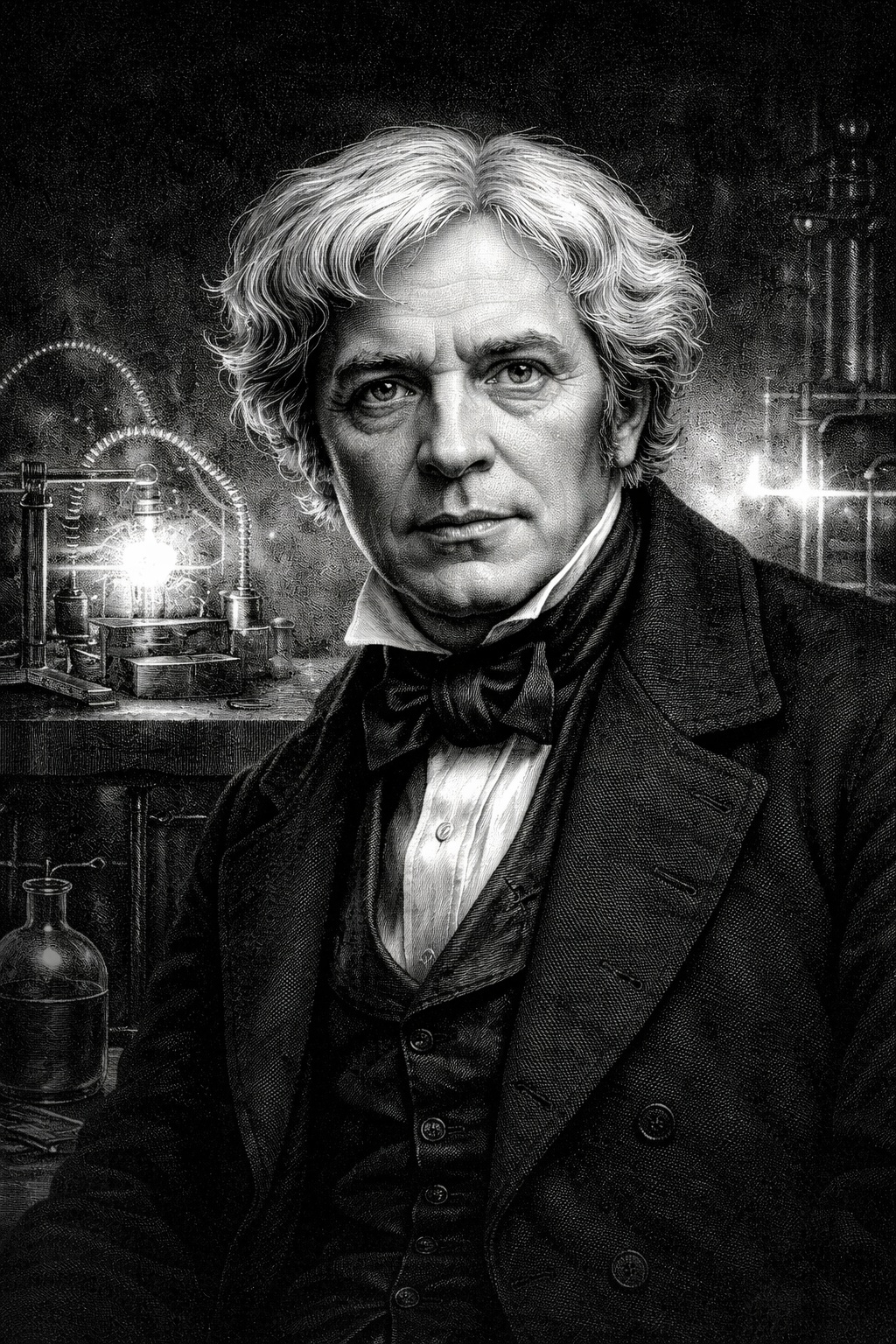
1791 — 1867
Induction, Electromagnetism, Power Engineering
Michael Faraday was a scientist who discovered the phenomenon of electromagnetic induction. His experiments showed that moving a conductor in a magnetic field can generate an electric current. This discovery became the foundation of electric generators and the entire modern power industry.