Which Soldering Iron Should a Beginner Choose?
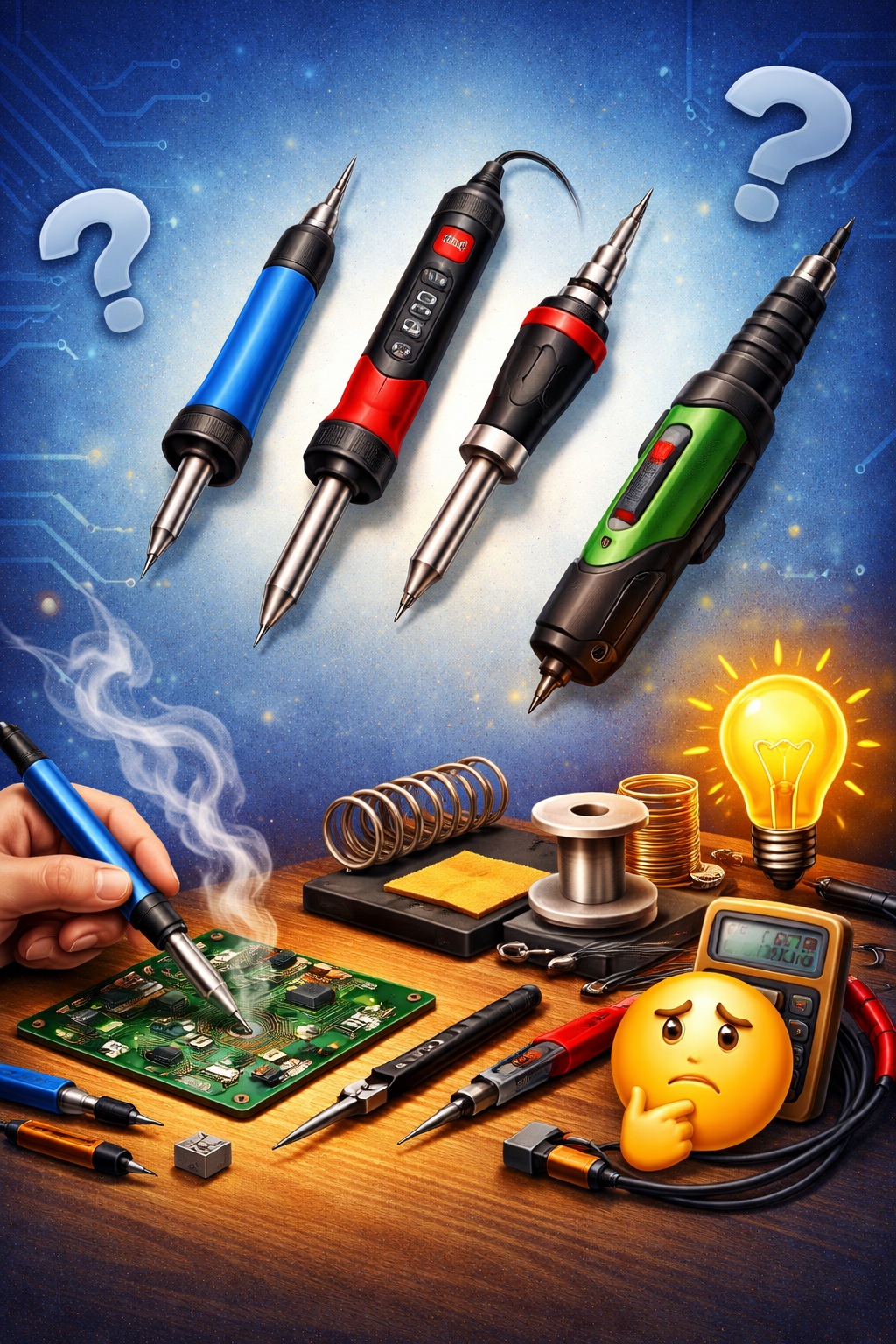
Soldering is one of the fundamental skills in electronics. Without it, it’s nearly impossible to build circuits, repair devices, or even connect basic components.
When beginners start exploring this field, one of the first questions they ask is: which soldering iron should I choose, and what’s the actual difference between them?
At first glance, all soldering irons may look similar, but in practice, the differences are significant and directly affect both usability and the quality of your work. In this article, we’ll go beyond theory and look at how these tools perform in real situations.
🔹 Types of soldering tools
In general, soldering tools can be divided into three main types:
- basic (fixed power),
- temperature-controlled,
- soldering stations.
However, it’s not enough to just know the names — understanding how they work is what really matters.
Let’s take a closer look at each type.
🔸 Basic soldering irons
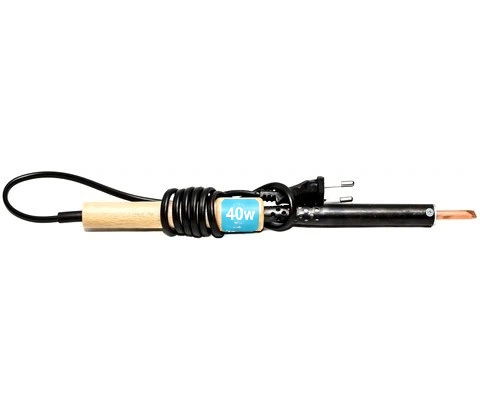
The simplest option is a basic soldering iron with no electronic control.
Once plugged in, it starts heating up and continues to do so without any temperature regulation. In other words, it heats as much as its design allows.
These irons can differ in the type of heating element used. Older models typically use a nichrome wire (a coil wrapped around the heater). This solution is inexpensive but slower and less stable.
More modern versions use ceramic heating elements, which heat up faster and maintain temperature more consistently. However, they are more fragile — dropping the tool can cause the ceramic element to crack or break.
🔧 Soldering tips
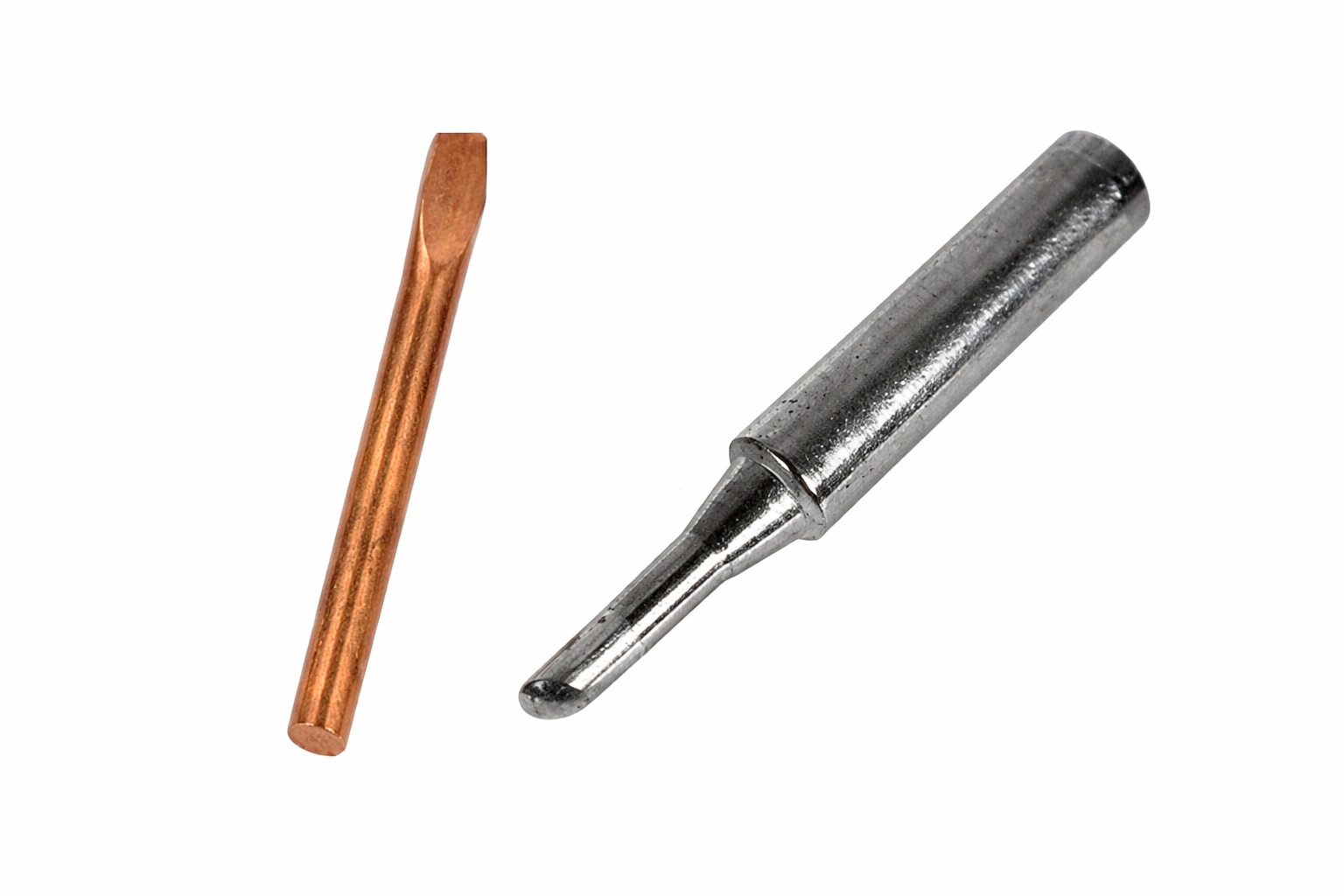
The tip is the part that directly contacts the solder and plays a crucial role in the quality of your work.
Copper tips have excellent thermal conductivity and higher thermal mass, making them ideal for soldering thick wires. However, they wear out quickly and need to be reshaped from time to time.
Coated tips (often referred to as “nickel-plated”) are different. They have a protective layer that prevents rapid wear, making them much more durable.
Important: these tips should not be filed or cleaned with hard brushes, as damaging the protective coating will significantly shorten their lifespan.
🔸 Temperature-controlled soldering irons
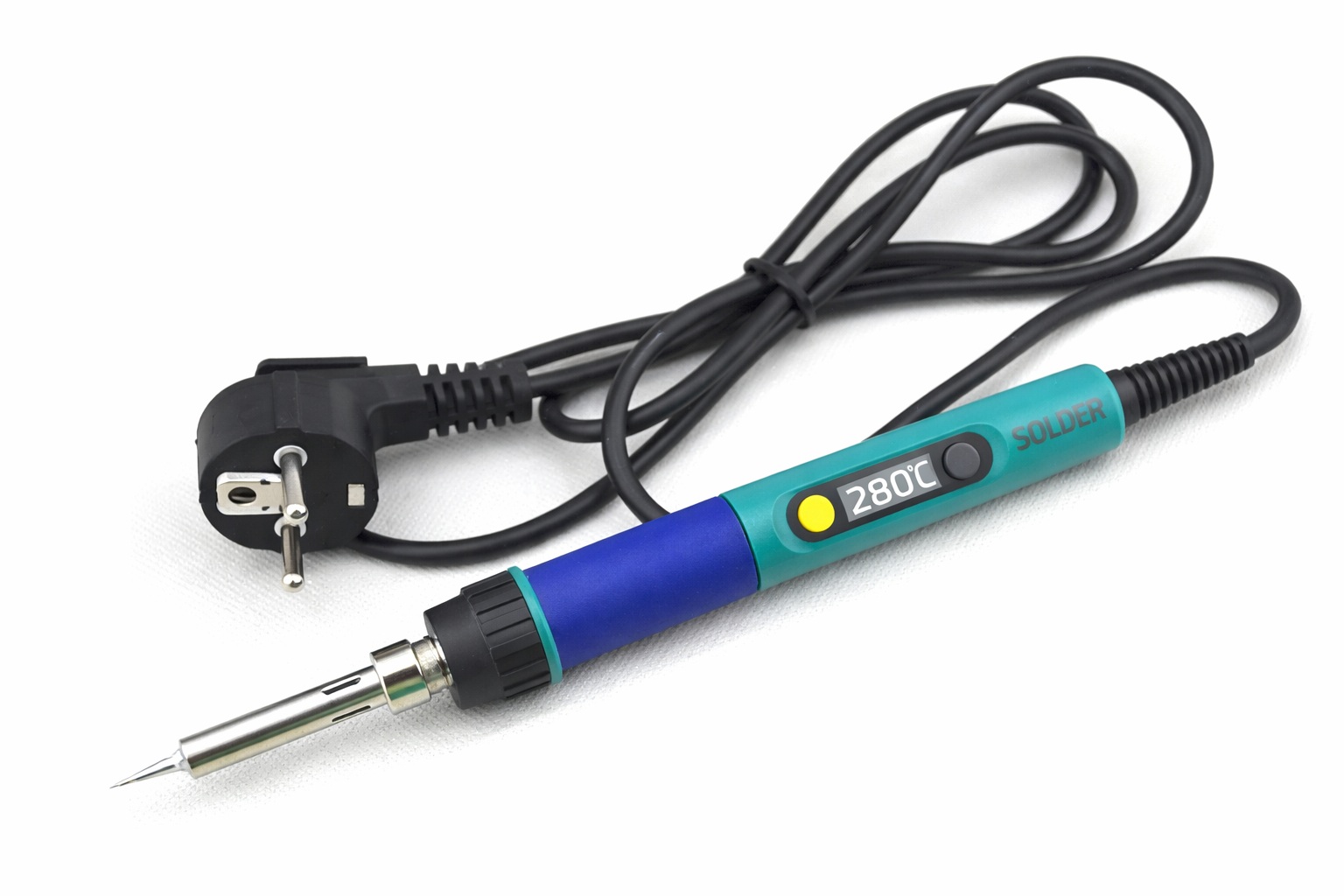
The next step up is a soldering iron with temperature control.
From the outside, it may look similar to a basic one, but internally it’s much more advanced. It includes a ceramic heating element along with a temperature sensor — a thermocouple.
A thermocouple is a simple but clever device. It consists of two different metals joined at one end. When there is a temperature difference, a small voltage is generated, which can be used to measure temperature.
This signal is sent to a control circuit that adjusts the heating power accordingly. As a result, the iron can maintain a more stable temperature and reduce the risk of overheating components.
🔸 Soldering stations
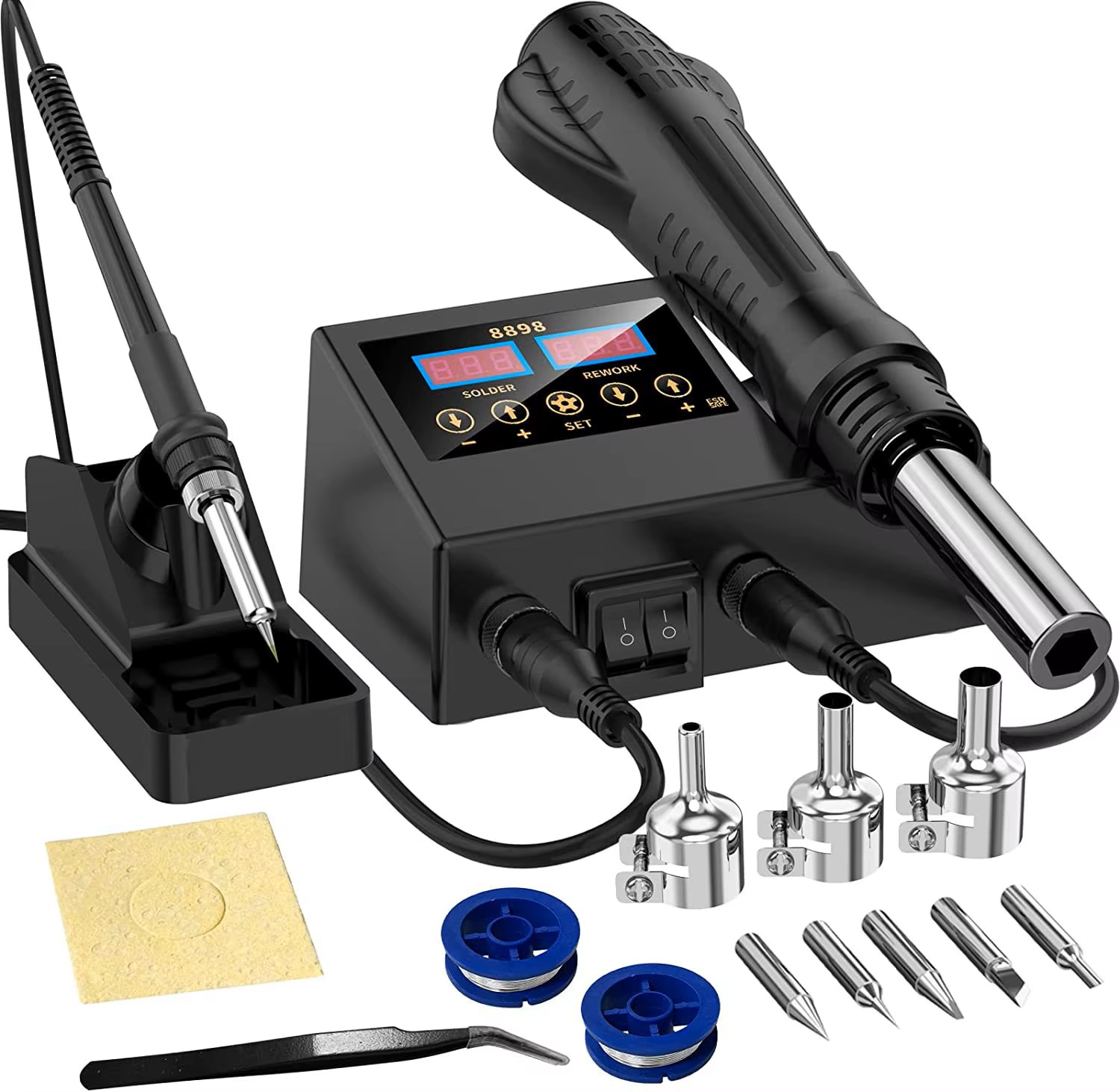
A soldering station is a more advanced solution that expands on the previous type.
It typically consists of a control unit and a soldering iron, and often includes an additional tool — a hot air gun.
The hot air tool is mainly used for working with SMD components, which are very small parts commonly found in modern electronics.
🔹 Important note about temperature
Even with temperature-controlled tools, it’s important to understand that measurements are not perfectly accurate.
Thermocouples always have some margin of error. For example, setting the temperature to 280°C doesn’t guarantee that the actual tip temperature is exactly the same.
If you don’t have a way to measure it precisely, you can judge by the soldering result. A good joint should be shiny. A dull (matte) finish usually indicates incorrect temperature.
It’s also important that the flux does not burn off before the joint is completed.
🔹 Practical use
A common question is: if you already have a soldering station, do you still need a basic soldering iron?
In practice — yes.
For electronics work (PCBs, components), a soldering station is the best choice because it offers precision and control.
However, when working with thicker wires (for example 2–2.5 mm²), the situation changes. In this case, not only temperature matters, but also how much heat the tip can deliver.
Copper tips in basic soldering irons have greater thermal mass, which allows them to transfer more heat quickly — this is crucial for larger connections.
🔹 My experience
In my work, I use two tools: a soldering station purchased on AliExpress and a simple 40W soldering iron bought from a local hardware store.
The soldering station is mainly used for electronics — PCBs, components, and small connections. It provides stable temperature and makes the work much more comfortable. It’s a budget-friendly entry-level station, but more than enough for most tasks.
👉 Check the model I personally use: (link)
The basic soldering iron is still useful, especially when working with thicker wires or general electrical connections.
In practice, this combination works best — each tool has its own purpose, and together they cover all typical tasks.
🔹 Summary
A soldering iron is one of the most important tools in electronics, and choosing the right one can significantly affect your experience.
Understanding how different types work helps you avoid common mistakes and learn faster.
For beginners, a soldering station is the best starting point, but it’s still worth having a simple soldering iron for heavier tasks.
🔹 Continue learning
If you want to go further:
🔧 Devices — analysis of real circuits and equipment.
📘 Education — structured materials on electronics fundamentals.
💬 Forum — questions, discussions, and shared experience.
Welcome to the world of practical electronics.