Electrical Power — How Much Energy a Device Uses
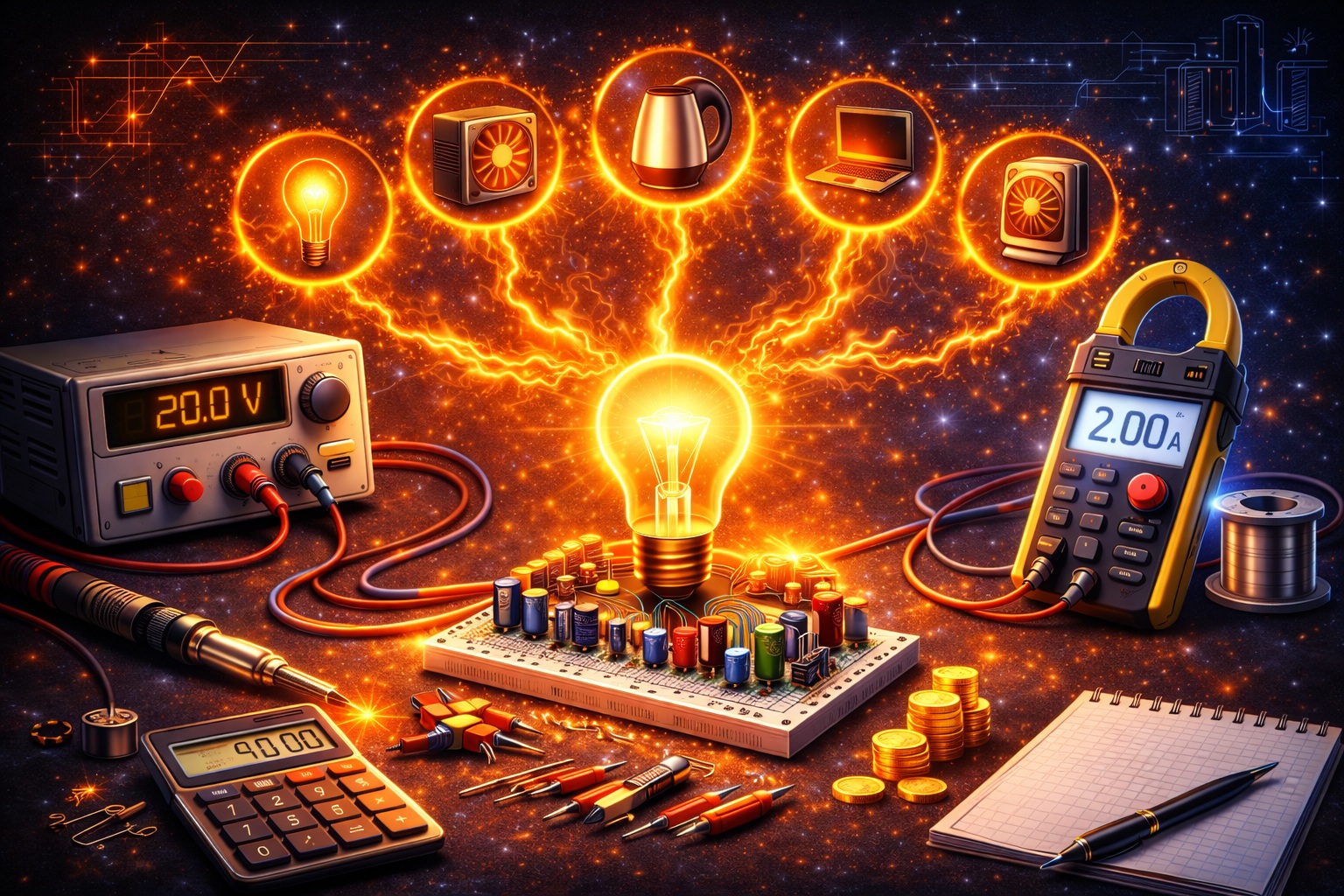
In the previous articles, we introduced the fundamental concepts of electrical engineering:
voltage — what causes charges to move
current — the movement of electric charges
resistance — what limits that movement
Ohm’s Law — the relationship between these quantities
This naturally leads to the next important question.
If current flows through a device, then:
👉 how much energy does it consume?
The answer is given by the concept of electrical power.
What Is Electrical Power?
Electrical power describes how quickly electrical energy is converted into other forms of energy.
In simpler terms:
👉 power is the amount of energy used per unit of time
If two devices operate under the same conditions but one has higher power, it will:
- produce more heat
- shine brighter
- perform more work
Power, Voltage, and Current
Electrical power is directly related to voltage and current.
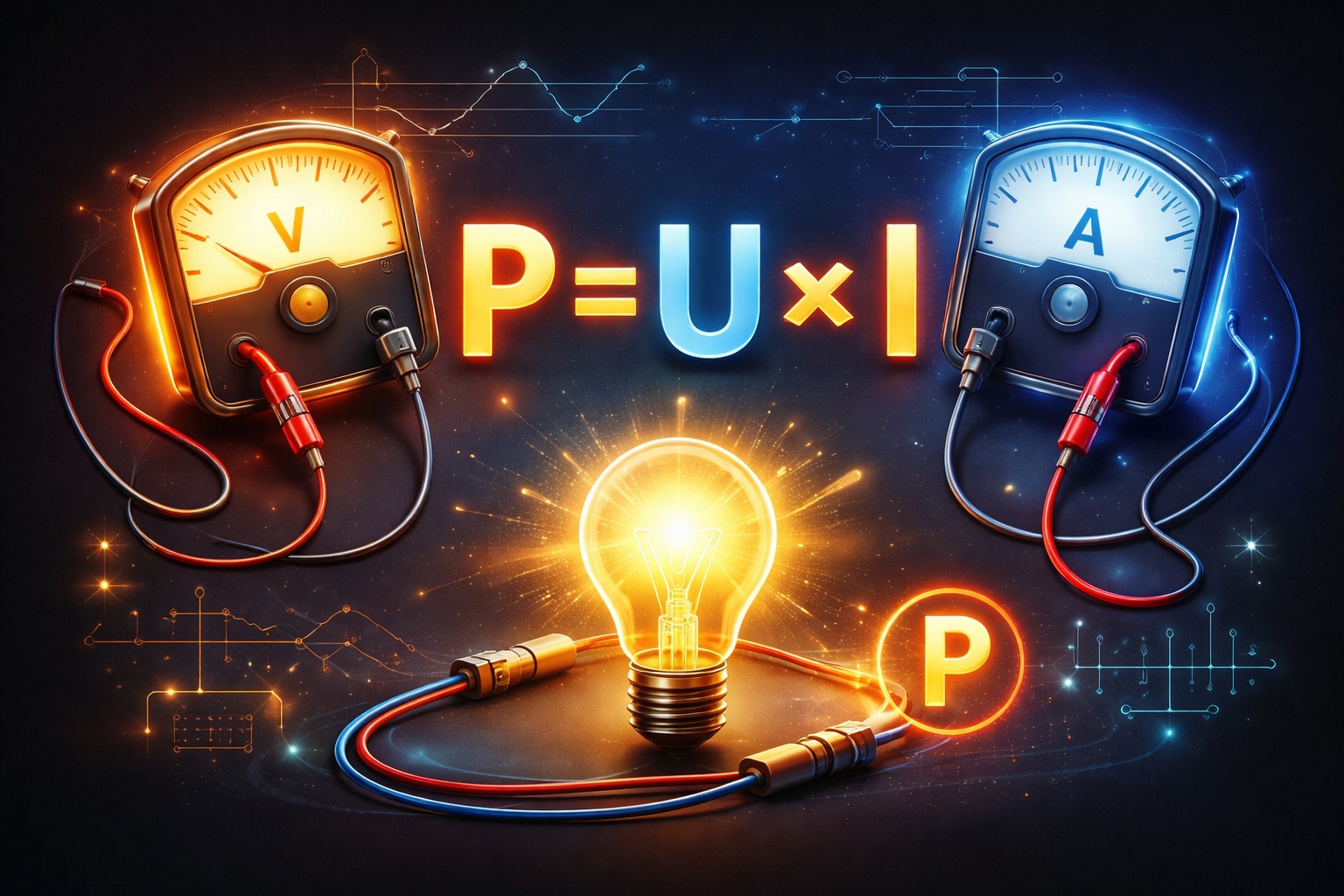
The relationship is expressed by the formula:
👉 P = U × I
where:
P — power
U — voltage
I — current
What This Formula Means
To understand this formula, it helps to look at its physical meaning.
Voltage determines how much energy each charge carries.
Current shows how many charges pass through the circuit over time.
When we multiply these two values, we get:
👉 how much energy is transferred every second
This is exactly what power represents.
Example Calculation
Let’s consider a simple example.
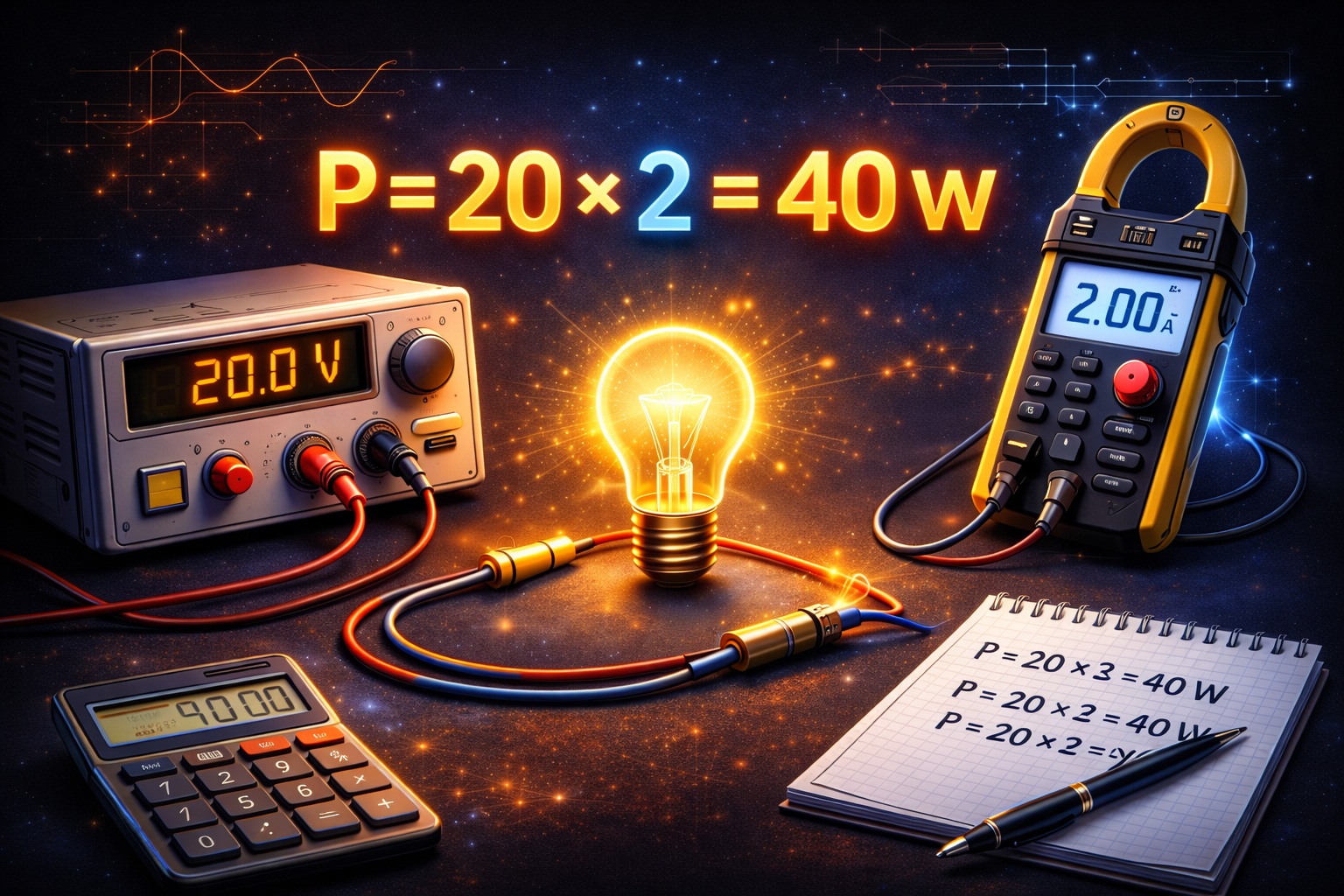
Imagine a device connected to a 20-volt source, with a current of 2 amperes flowing through it.
We want to find the power.
Using the formula:
👉 P = U × I
Substitute the values:
👉 P = 20 × 2 = 40 W
This means the device consumes 40 watts of power.
Unit of Power
Power is measured in units called watts (W).
This unit is named after the engineer James Watt.
In everyday life, we encounter a wide range of power values:
- light bulbs — tens of watts
- laptops — around 50–100 W
- electric kettles — up to 2000 W
Higher power means higher energy consumption.
Power and Resistance
Using Ohm’s Law, power can also be expressed in terms of resistance.
By transforming the formulas, we obtain:
👉 P = U² / R
👉 P = I² × R
These forms are useful when voltage or current is not directly known.
What This Means in Practice
If resistance is low, current increases, and power rises.
If resistance is high, current decreases, and power drops.
This explains why:
- thin wires can overheat
- heating devices use specific materials
- different devices require different operating conditions
Why Devices Heat Up
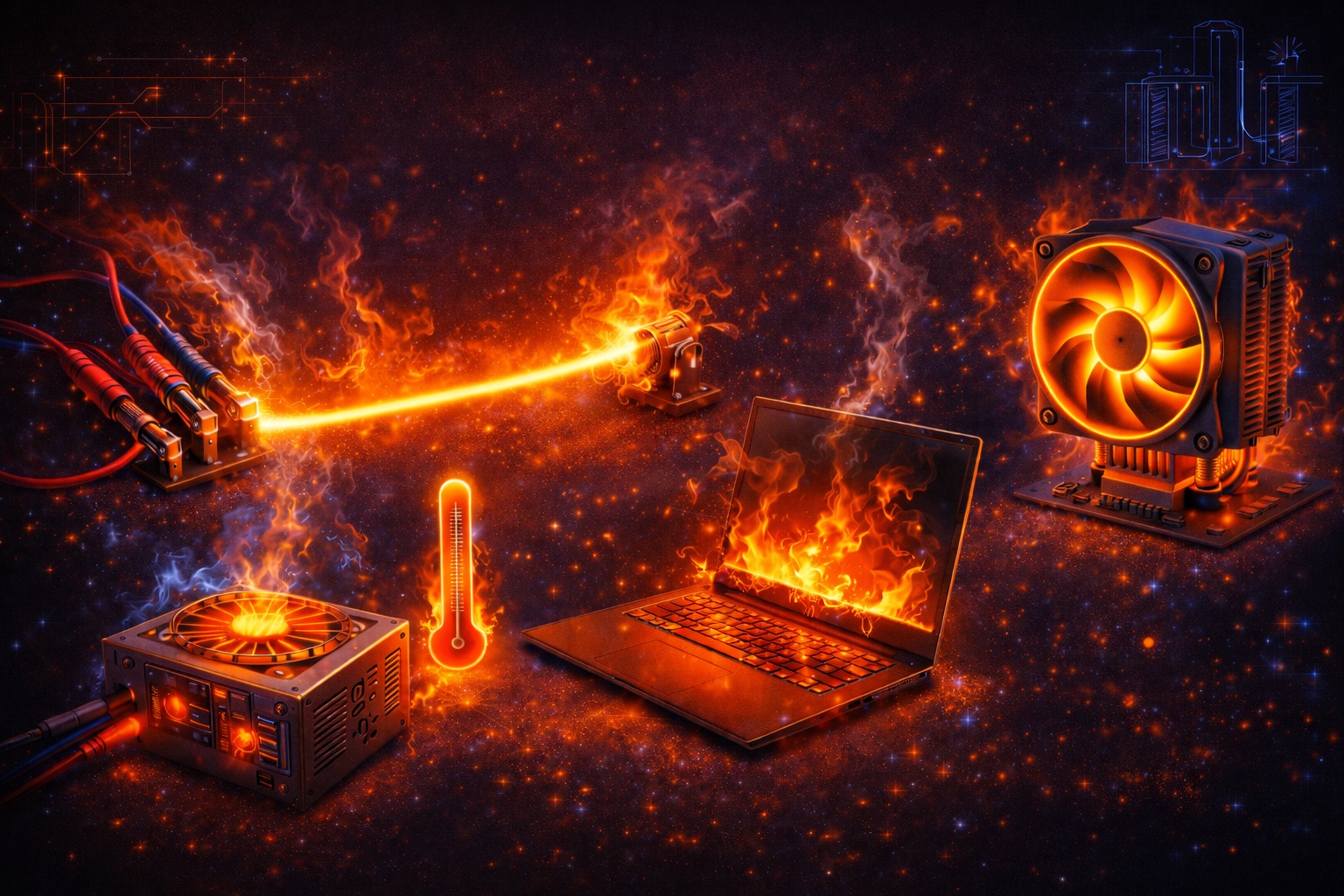
When current flows through a conductor, part of the electrical energy is converted into heat.
This is directly related to resistance.
The greater the power:
👉 the more energy is converted
👉 the stronger the heating effect
That is why high-power devices often require cooling.
Power in Everyday Life
We encounter electrical power every day.
For example, two electric kettles connected to the same outlet may heat water at different speeds.
The one with higher power works faster because it transfers more energy per second.
Power is therefore directly related to the performance of a device.
Power vs Energy
It is important to distinguish between:
👉 power
👉 energy
Power describes how quickly energy is used.
Energy describes the total amount used over time.
For example:
a 100-watt device running for one hour consumes 100 watt-hours (Wh) of energy.
Why Understanding Power Matters
Understanding electrical power is essential in practice.
It allows us to:
- estimate energy consumption
- choose appropriate devices
- avoid overloading circuits
This leads to safer and more efficient use of electrical systems.
Summary
Electrical power describes how much energy a device uses per unit of time.
It depends on voltage and current and is calculated using:
👉 P = U × I
It can also be expressed in terms of resistance.
Power determines how intensively a device operates and how much energy it consumes.
Next Step
This leads to another important question.
👉 how do we calculate total energy consumption over time?
In the next article, we will explore electrical energy in more detail.
You can also:
🔧 visit the “Devices” section to see practical applications;
📘 continue learning in the “Education” section;
💬 ask questions or join the discussion on the Forum.