What Is Electricity?
We turn on the lights, charge our phones, start our computers, and use refrigerators every day — yet we rarely stop to think about what makes all of this possible. Electricity has become so common that it feels as natural as air or water.
But if we pause for a moment and ask a simple question:
What is electricity, really?
The answer is not as obvious as it may seem.
Let’s break it down step by step.
⚡ Electricity Around Us

Lightning during a storm is electricity.
A small spark when you touch a metal handle is electricity.

Power lines stretching across kilometers transport electrical energy.
Even charging your phone is a controlled movement of electric charges.
Electricity was not invented by humans. People simply learned how to understand and use it. As far back as ancient times, it was observed that rubbed amber could attract small objects. Later, scientists realized that this was an electrical phenomenon.
To understand electricity, we need to begin with the most basic concept — electric charge.
What Is Electric Charge?
In nature, there are particles that possess a special property called electric charge.
Charges come in two types:
• positive
• negative
Charges of the same type repel each other, while opposite charges attract.
This behavior is similar to magnets: like poles repel, unlike poles attract. However, in electricity we are not dealing with magnets, but with charged particles.
When you rub a balloon on your hair and it starts attracting small pieces of paper, electrons are being transferred from one material to another. This creates an electric imbalance that leads to attraction.
But where are these charges located?
What Is Matter Made Of?
Everything around us — tables, air, water, metal — is made of atoms.
An atom is an extremely small particle of matter.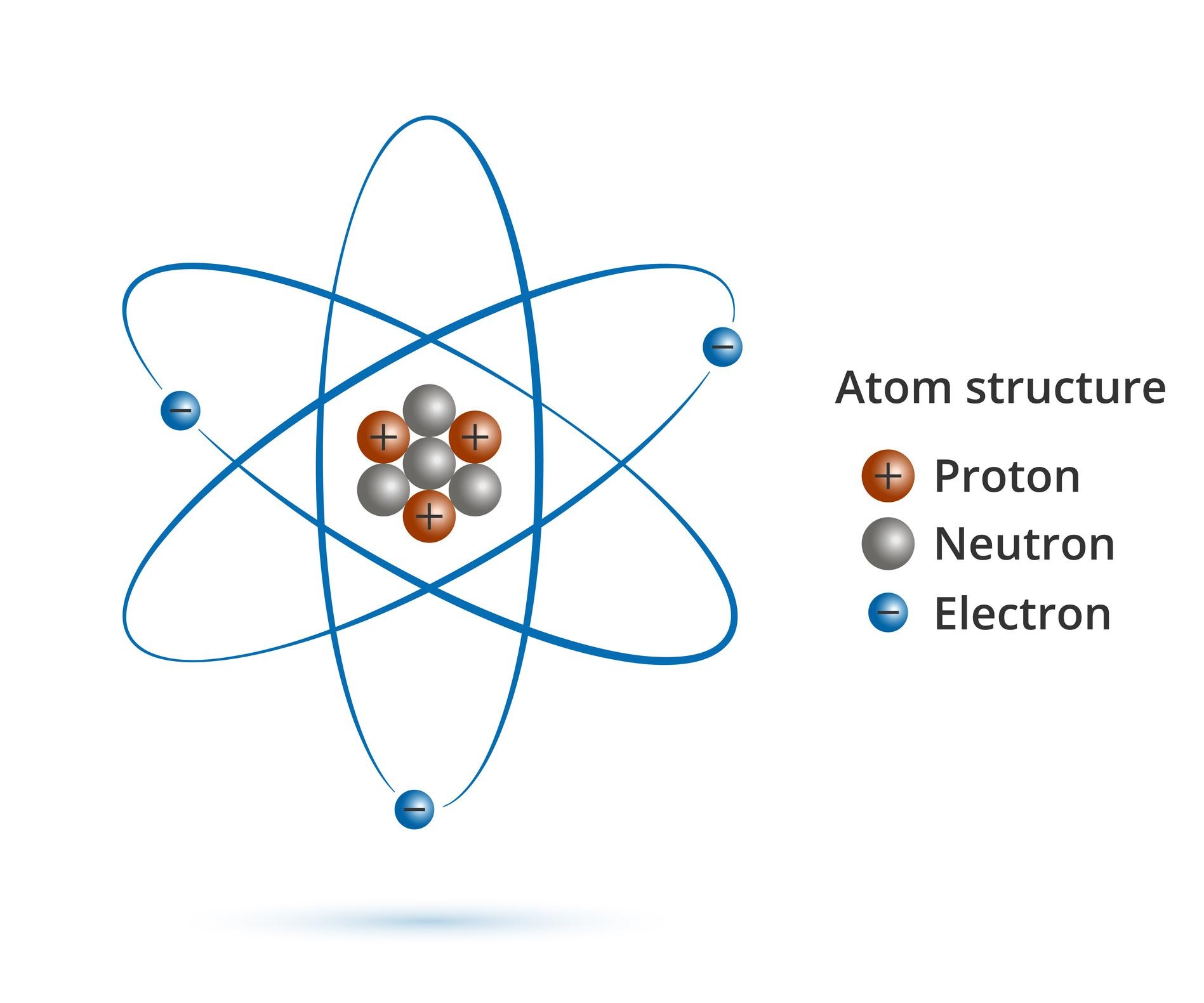
At its center is a nucleus, and around it move electrons.
• The nucleus carries a positive charge.
• Electrons carry a negative charge.
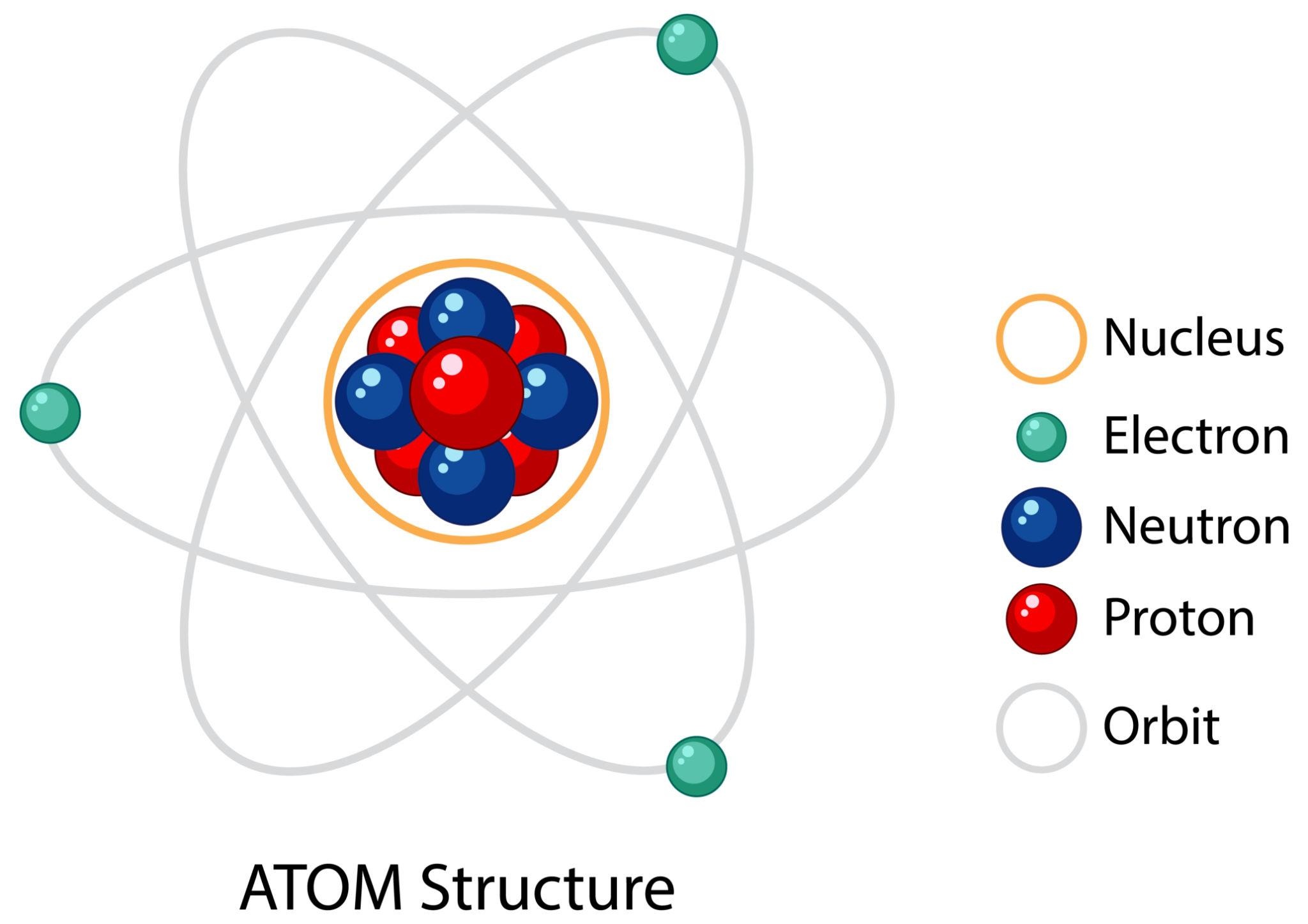
Under normal conditions, an atom is electrically neutral — the number of positive and negative charges is balanced.
However, in certain situations, electrons can leave their atoms or move between them. This movement is the foundation of electrical phenomena.
What Moves Inside a Wire?
When we talk about electricity in household devices or wires, we are usually referring to the movement of electrons.
In metals, some electrons are loosely bound to atoms, which allows them to move relatively freely through the material.
It’s important to understand this: electrons are always present in a wire. They are constantly moving — but normally in a random, chaotic way, in all directions.
When a power source such as a battery or generator is connected, it creates an influence that “organizes” this motion. Electrons begin to drift mainly in one direction. This organized movement forms the basis of electric current.
What Is Electric Current?
Electric current is the organized movement of electric charges.
If the movement is random — there is no current.
If the movement has a common direction — current exists.
Imagine a public square where people are walking in different directions.
Now imagine the doors of a subway station open, and people begin moving toward the exit.
The difference between these two situations illustrates the difference between chaotic motion and electric current.
The Water Analogy
To make this easier to visualize, electricity is often compared to water flowing through a pipe.
• A pipe filled with water is like a wire filled with electrons.
• If the water stands still — there is no flow.
• If you open the tap — water begins to move.
Water flow can be compared to electric current.
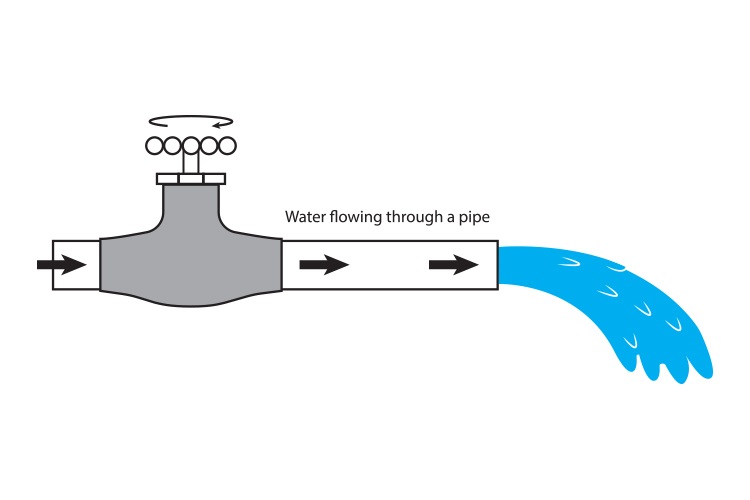
However, there is an important difference. Water flows relatively slowly, while electrical effects occur almost instantly.
When you flip a light switch, the bulb lights up immediately. This is not because electrons traveled all the way from a power plant to your home. Electrons are already present in the wires. The change spreads almost simultaneously throughout the entire circuit.
Where Can Current Exist?
Electric current does not exist only in metals.
It can occur:
• in metallic conductors — due to electron movement;
• in solutions — due to the movement of charged particles (ions);
• in semiconductors — through more complex mechanisms.
The key idea is simple:
Electricity is the movement of charge, regardless of the medium.
Electricity and Energy
People often say, “energy flows through the wire.” This is partly true, but not entirely precise.
Current is the movement of particles.
Energy is transferred because of that movement.
When you turn on a lamp:
- Current begins to flow in the circuit.
- Electrons interact with the material of the bulb.
- Energy is converted into light and heat.
Electricity is therefore a way of transferring energy through the movement of charges.
Why Understanding the Basics Matters
If we jump directly to voltage, resistance, and formulas, electricity can seem abstract and complicated.
But if you understand that:
• matter contains charged particles,
• those particles can move,
• organized movement creates current,
then the next concepts will feel logical and connected.
Electronics is not magic.
It is controlled movement of electric charges.
Why We Cannot See Electricity Directly
We can see the light of a bulb or a lightning strike, but we cannot see electric current itself.
Electrons are extremely small, and their motion occurs inside materials. What we observe are the effects:
• heating of a wire,
• glowing of a lamp,
• rotation of a motor,
• charging of a battery.
Electricity is a hidden process that reveals itself through results.
Summary
• Everything around us is made of atoms.
• Atoms contain negatively charged electrons.
• Charges can attract and repel each other.
• When charges move in a single direction, electric current is created.
• Electricity is the movement of electric charges.
This is the foundation of all electronics — from a simple battery to advanced computer systems.
What’s Next?
If you would like to continue, the next step is to understand the structure of the atom and why electrons are able to move.
In the next article, we will explore:
The Atom, the Electron, and Electric Charge — Why Current Is Possible.
You can also:
🔧 visit the “Devices” section to see practical applications;
📘 continue learning in the “Education” section;
💬 join discussions and ask questions in the Forum.