What Is a Capacitor and What Is It Used For?
What Is a Capacitor?
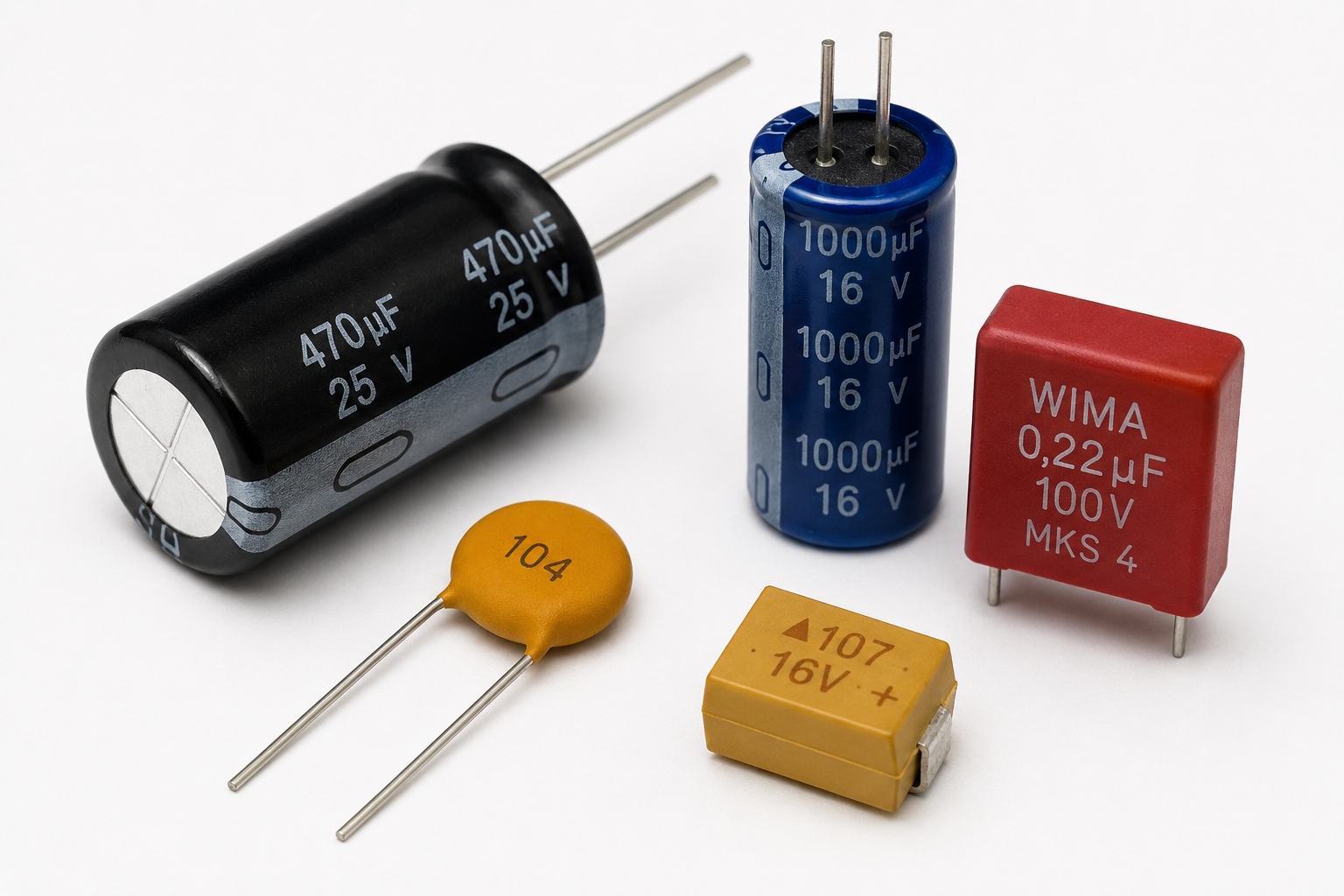
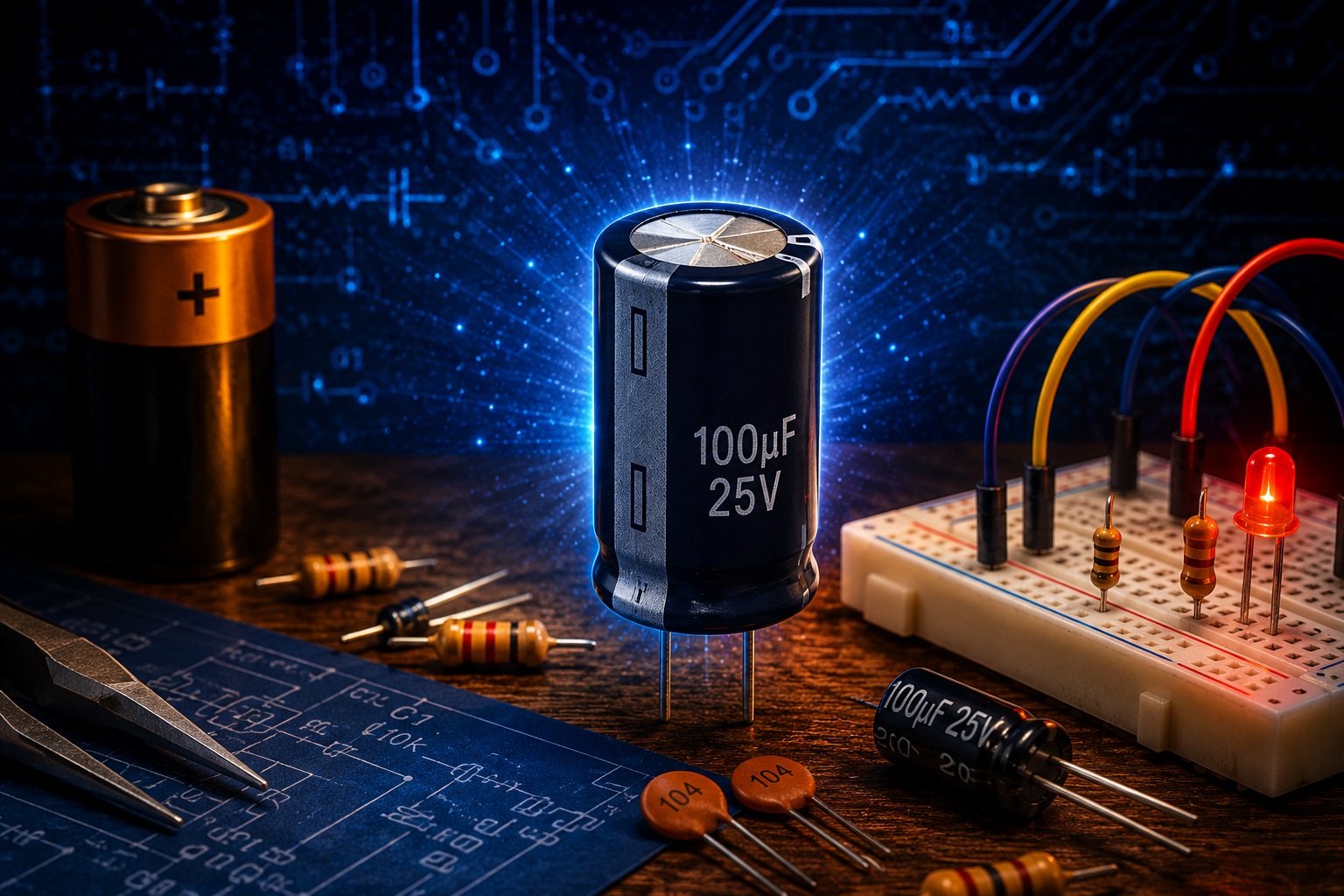
A capacitor is an electronic component that can temporarily store electrical energy and then release it back into a circuit when needed.
Unlike a battery, a capacitor cannot power a device for a long time.
Instead, it stores energy only for a short period and releases it very quickly.
This unique property makes capacitors essential in modern electronics.
They are used in power supplies, computers, televisions, radios, smartphones, and countless other electronic devices.
In simple terms, a capacitor works like a small rechargeable energy container.
It stores energy when power is available and releases it whenever the circuit needs it.
Capacitor Structure
Although capacitors come in many different shapes and sizes, they all have the same basic structure.
Every capacitor consists of two conductive plates separated by a special insulating material called a dielectric.
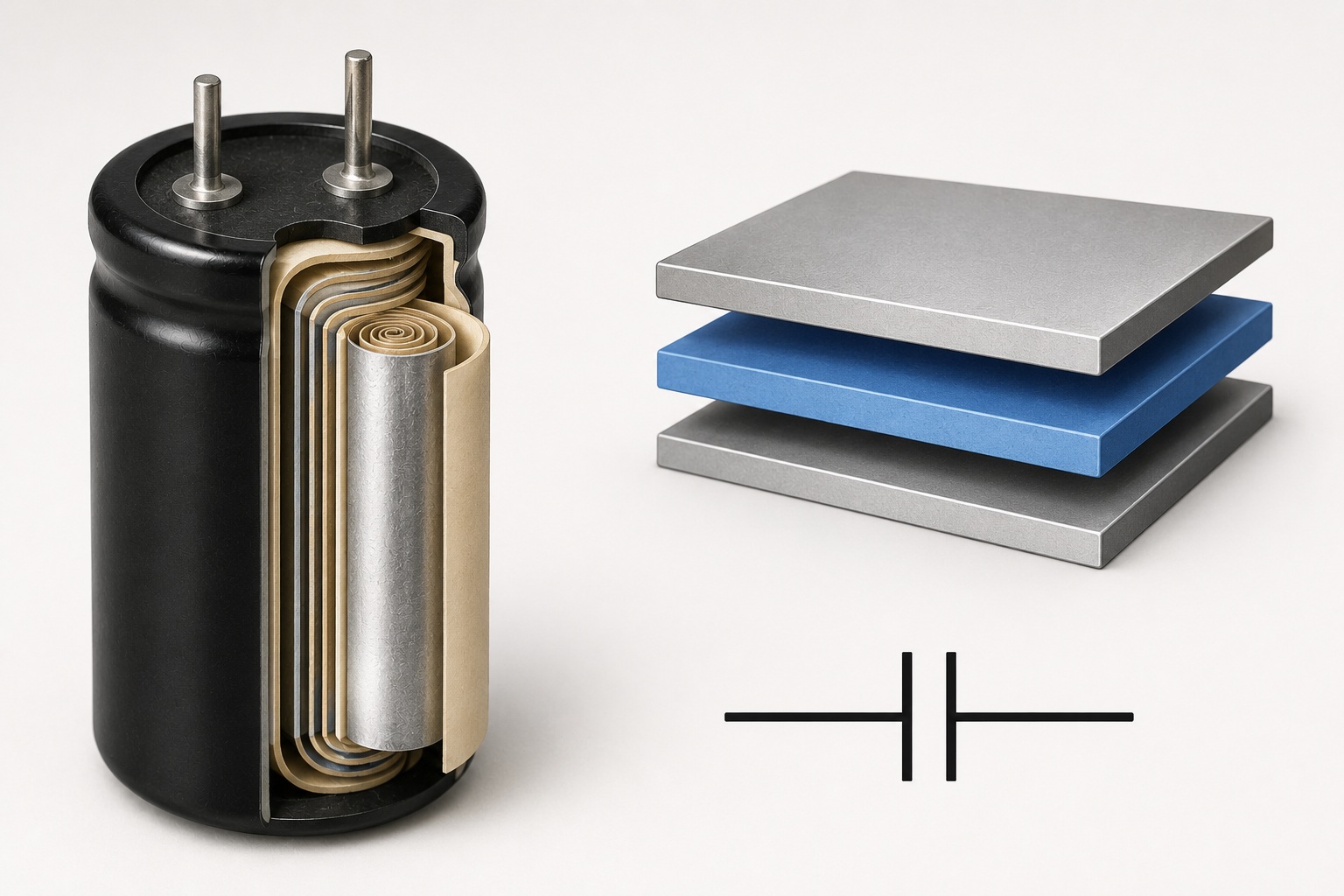
The dielectric prevents electric current from flowing directly between the two plates.
Instead, electrical energy is stored in the electric field created between them.
Different capacitors use different dielectric materials.
These may include ceramic, plastic film, paper, aluminum oxide, tantalum oxide, and other insulating materials.
The type of dielectric determines many of the capacitor's characteristics, including its capacitance, operating voltage, stability, and intended application.
Fortunately, beginners do not need to memorize all of these materials.
The most important thing to remember is that every capacitor stores electrical energy in the electric field between its two conductive plates.
What Types of Capacitors Are There?
There are many different types of capacitors.
They vary in size, shape, capacitance, operating voltage, and the materials used in their construction.
However, beginners only need to become familiar with the most common types.
Ceramic Capacitors
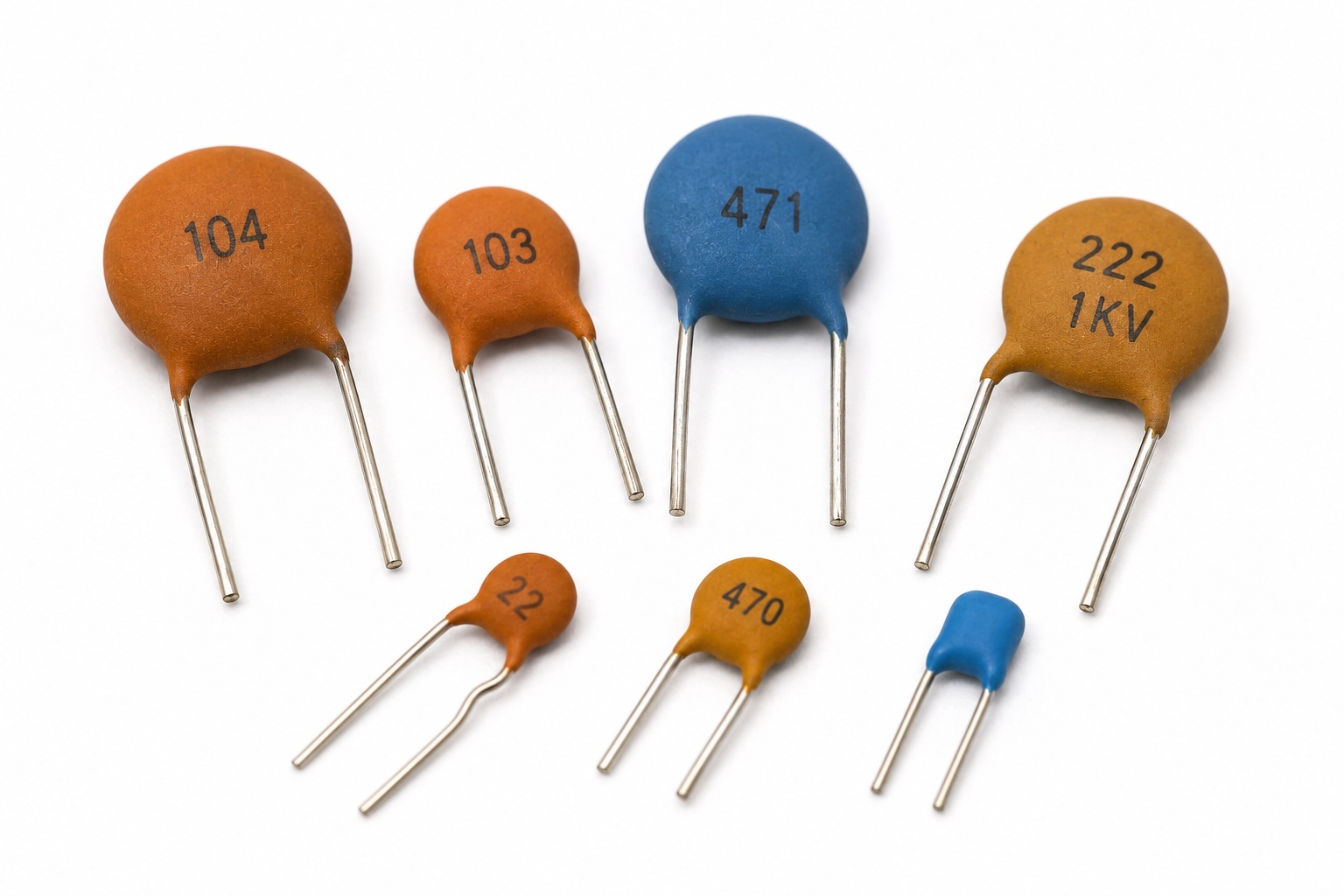
Ceramic capacitors are among the most widely used capacitors in electronics.
They are usually very small and can be found on almost every electronic circuit board.
Their main advantages include:
- compact size,
- low cost,
- high reliability,
- long service life.
Because ceramic capacitors are non-polarized, they can be connected in either direction.
They are commonly used to reduce electrical noise, filter signals, and stabilize voltage in electronic circuits.
Electrolytic Capacitors
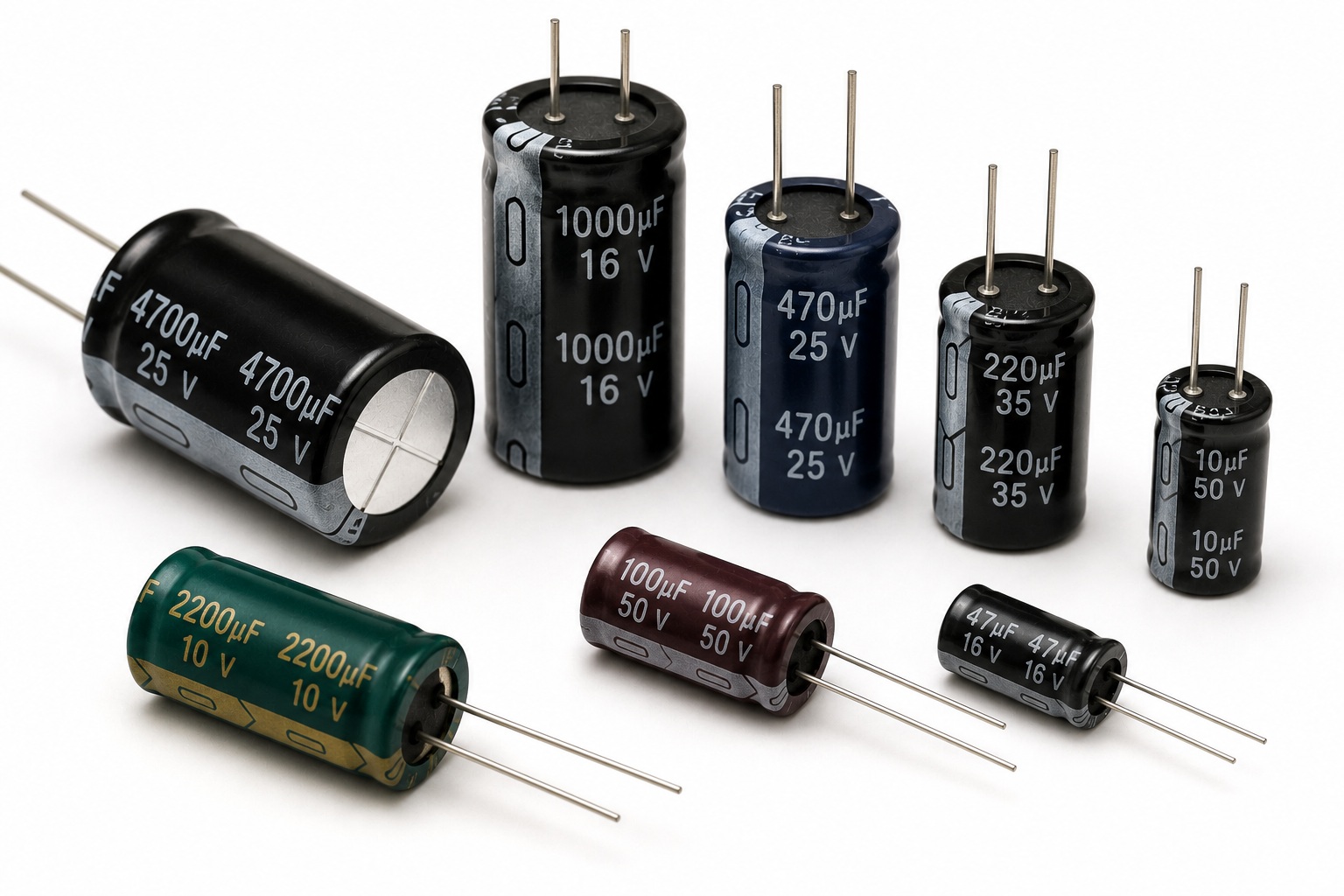
When most people hear the word "capacitor," this is the type they usually imagine.
Electrolytic capacitors typically have a cylindrical aluminum case.
Their biggest advantage is their high capacitance.
Because they can store a relatively large amount of electrical energy, they are widely used in power supplies, amplifiers, and many other electronic devices.
However, they have one very important characteristic.
They are polarized.
This means they must always be connected with the correct polarity.
Film Capacitors
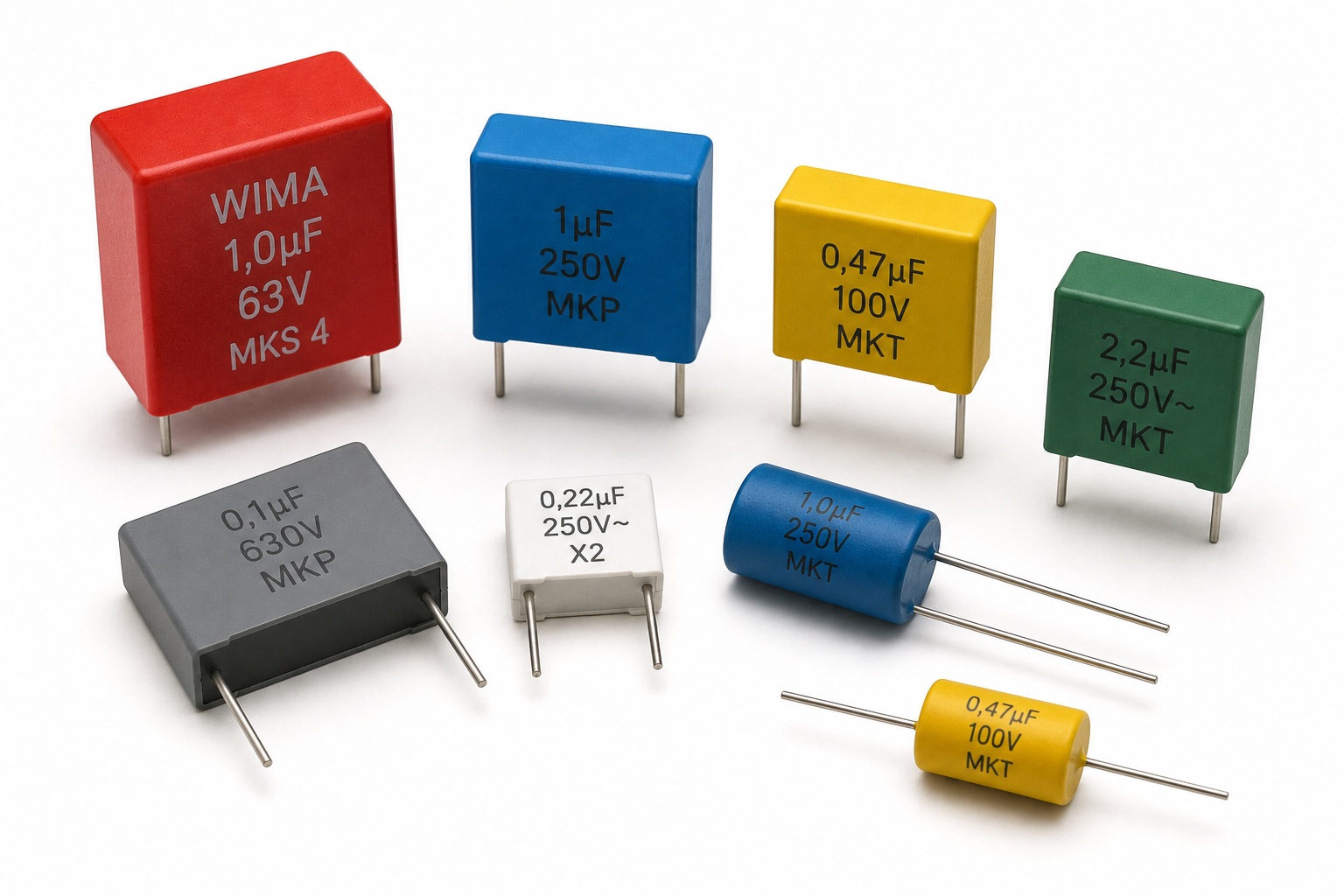
Film capacitors are known for their excellent stability and reliable electrical performance.
They are commonly used in audio equipment, filters, measuring instruments, and other precision electronic circuits.
Most film capacitors are non-polarized, so they can be connected in either direction.
Tantalum Capacitors
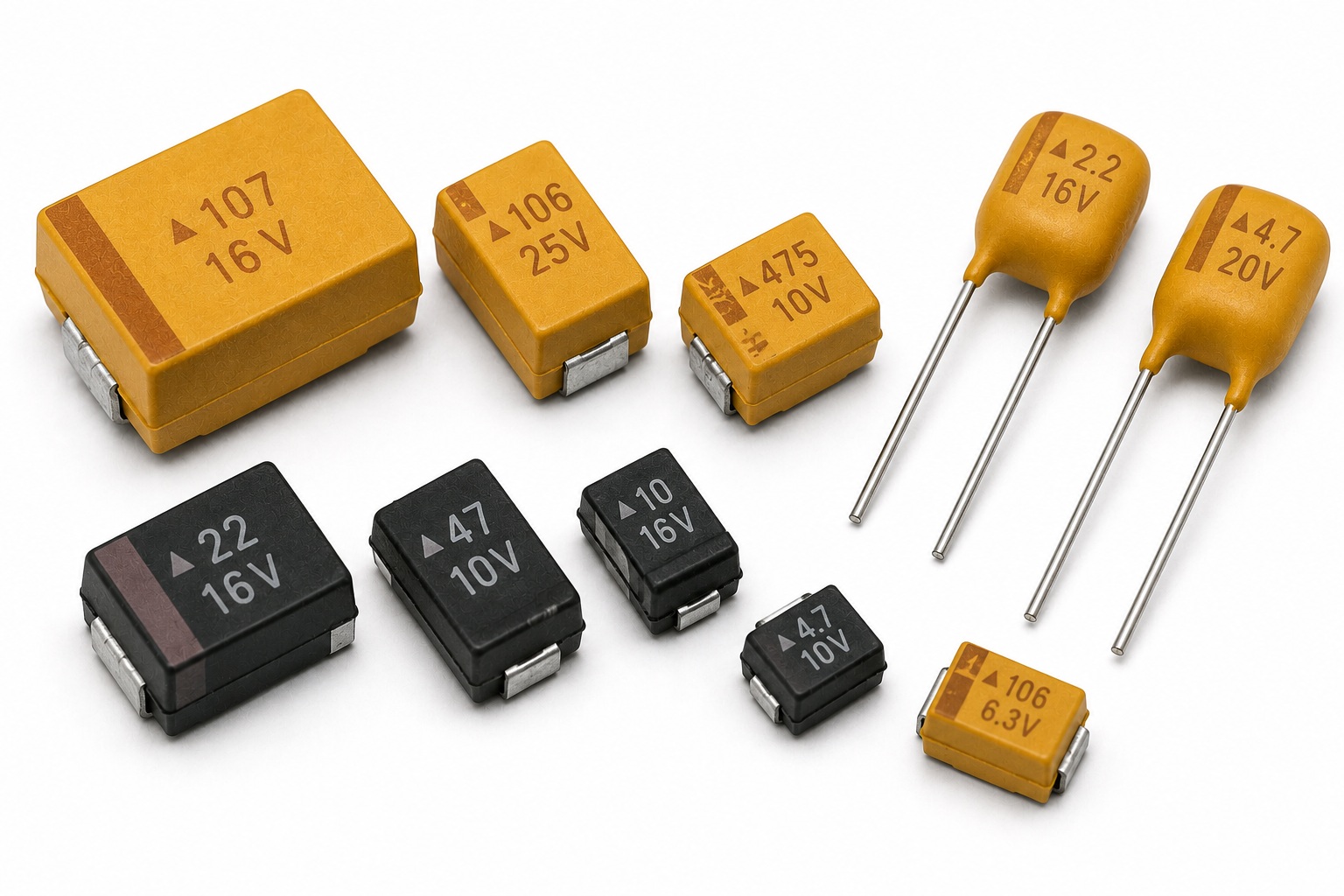
Tantalum capacitors provide a high capacitance while remaining very compact.
They are widely used in mobile devices, computers, and other modern electronic equipment where space is limited.
Like electrolytic capacitors, most tantalum capacitors are polarized and must be connected correctly.
Of course, many other types of capacitors exist.
However, beginners only need to remember one simple rule.
Although capacitors may look very different, they all work according to the same basic principle.
Polarity and Markings
Some capacitors can be connected in either direction, while others must always be connected with the correct polarity.
That is why you should always check the markings on a capacitor before installing it in a circuit.
Non-Polarized Capacitors
Ceramic capacitors and most film capacitors are non-polarized.
This means they can be connected in either direction.
It does not matter which lead is connected to the positive side or the negative side of the circuit.
Because of this, non-polarized capacitors are especially beginner-friendly, as they are much harder to connect incorrectly.
Polarized Capacitors
Electrolytic capacitors and most tantalum capacitors are polarized.
They have two terminals:
- positive (+),
- negative (−).
They must be connected with the correct polarity.
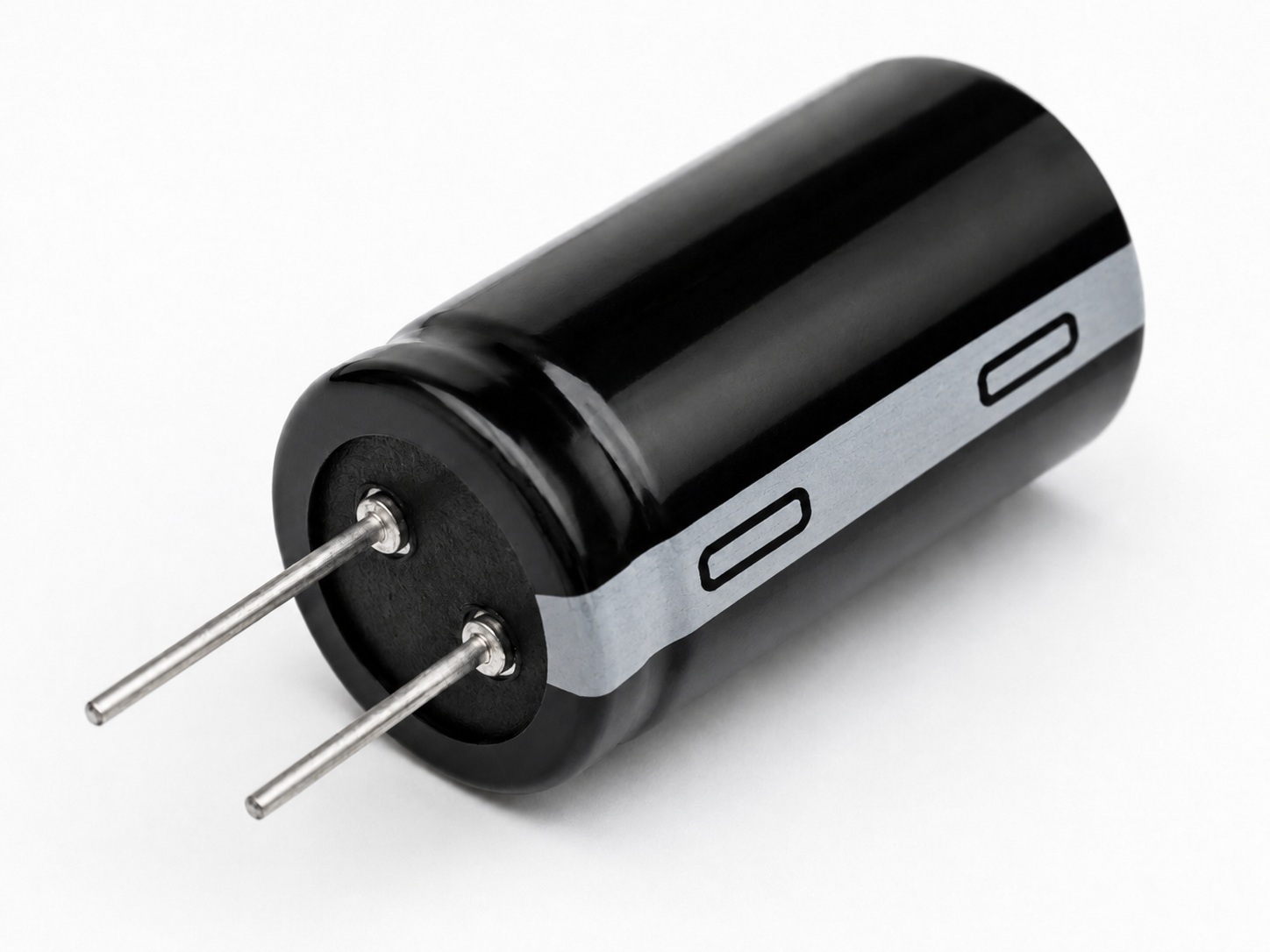
The light-colored stripe on the capacitor's body marks the negative terminal.
Many beginners mistakenly believe that the stripe indicates the positive terminal.
In reality, it is exactly the opposite.
The stripe always marks the negative terminal.
On many new capacitors, the longer lead indicates the positive terminal, while the shorter lead indicates the negative terminal.
However, once a capacitor has been installed on a circuit board, its leads are usually trimmed short.
For this reason, it is always safer to rely on the markings printed on the capacitor itself.
What Happens If You Connect a Capacitor Backwards?
Connecting a polarized capacitor incorrectly can cause it to overheat.
In some cases, it may fail almost immediately.
As pressure builds up inside the capacitor, gases begin to accumulate.
To prevent the case from bursting uncontrollably, most electrolytic capacitors have specially designed pressure relief vents on the top.
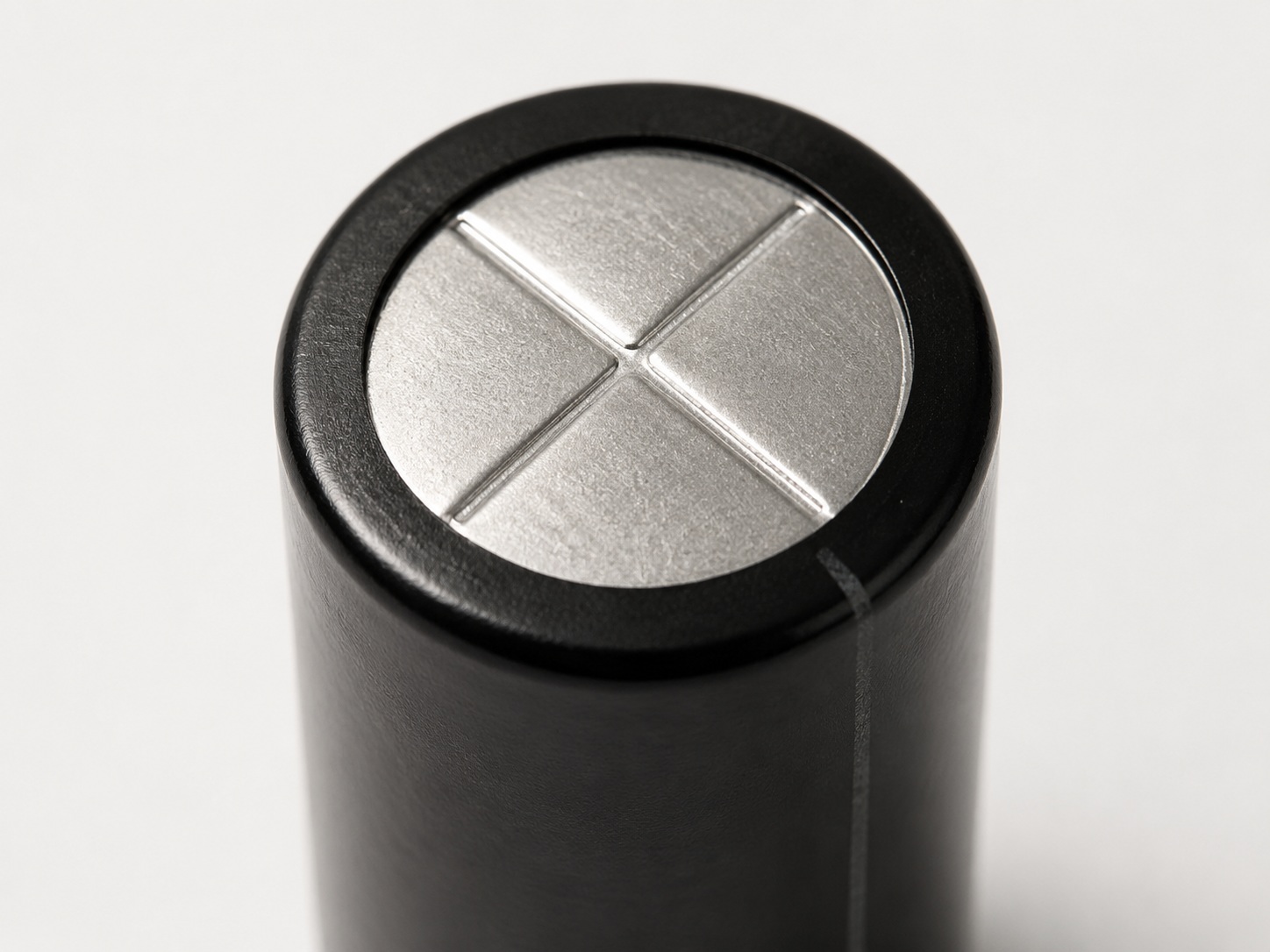
These safety vents allow the capacitor to open in a controlled way if the internal pressure becomes too high.
You may have seen damaged capacitors described as having "exploded."
In reality, they do not explode like fireworks.
In most cases, the pressure relief vent simply opens, allowing gas and electrolyte to escape safely.
That is why you should always double-check the polarity before powering up a circuit that contains polarized capacitors.
Where Are Capacitors Used?
Now that you know how a capacitor is built, a natural question comes to mind.
Where are capacitors actually used?
The answer is surprisingly simple.
Almost everywhere.
Modern electronics would not function properly without them.
Let's look at some of the most common applications.
Smoothing Voltage
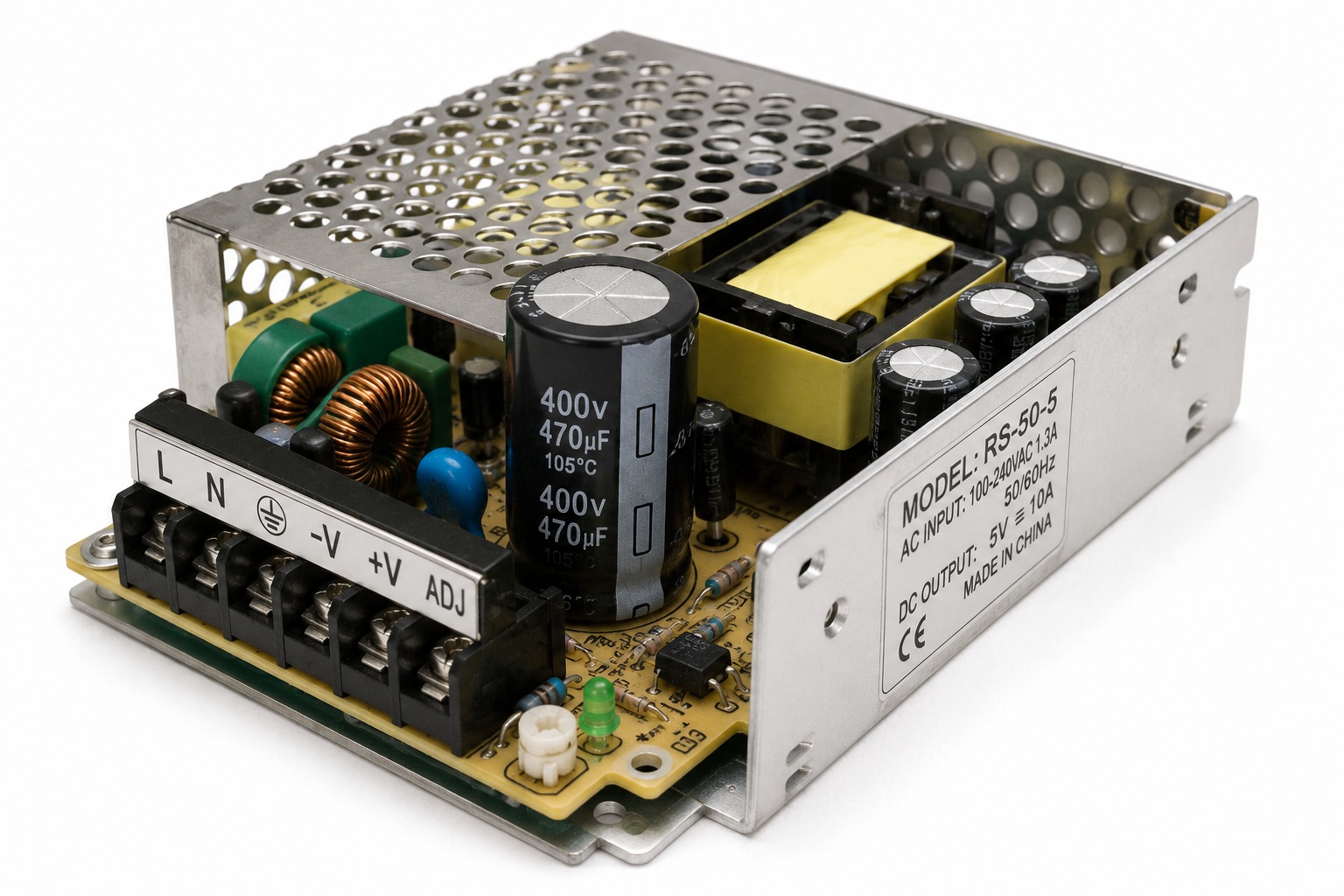
One of the most important jobs of a capacitor is smoothing voltage.
Even after AC voltage has been converted to DC in a power supply, small voltage fluctuations still remain.
A capacitor charges when the voltage rises and releases its stored energy when the voltage drops.
As a result, the output voltage becomes much smoother and more stable.
Temporary Energy Storage
Sometimes an electronic device needs a small amount of energy for only a fraction of a second.
A capacitor can store that energy quickly and release it just as quickly when needed.
That is why capacitors are often placed close to integrated circuits and microprocessors.
They help compensate for sudden spikes in current demand, allowing electronic devices to operate more reliably.
Signal Processing
Capacitors also play an important role in signal processing.
They can block DC voltage while allowing AC signals to pass, reduce electrical noise, and work together with other components to shape electronic signals.
We'll explore these functions in more detail later when we learn about RC circuits.
Electric Motors
Some electric motors use special start capacitors or run capacitors.
These capacitors can be found in fans, air compressors, pumps, air conditioners, and many household appliances.
They help the motor start more easily and provide the torque needed during startup.
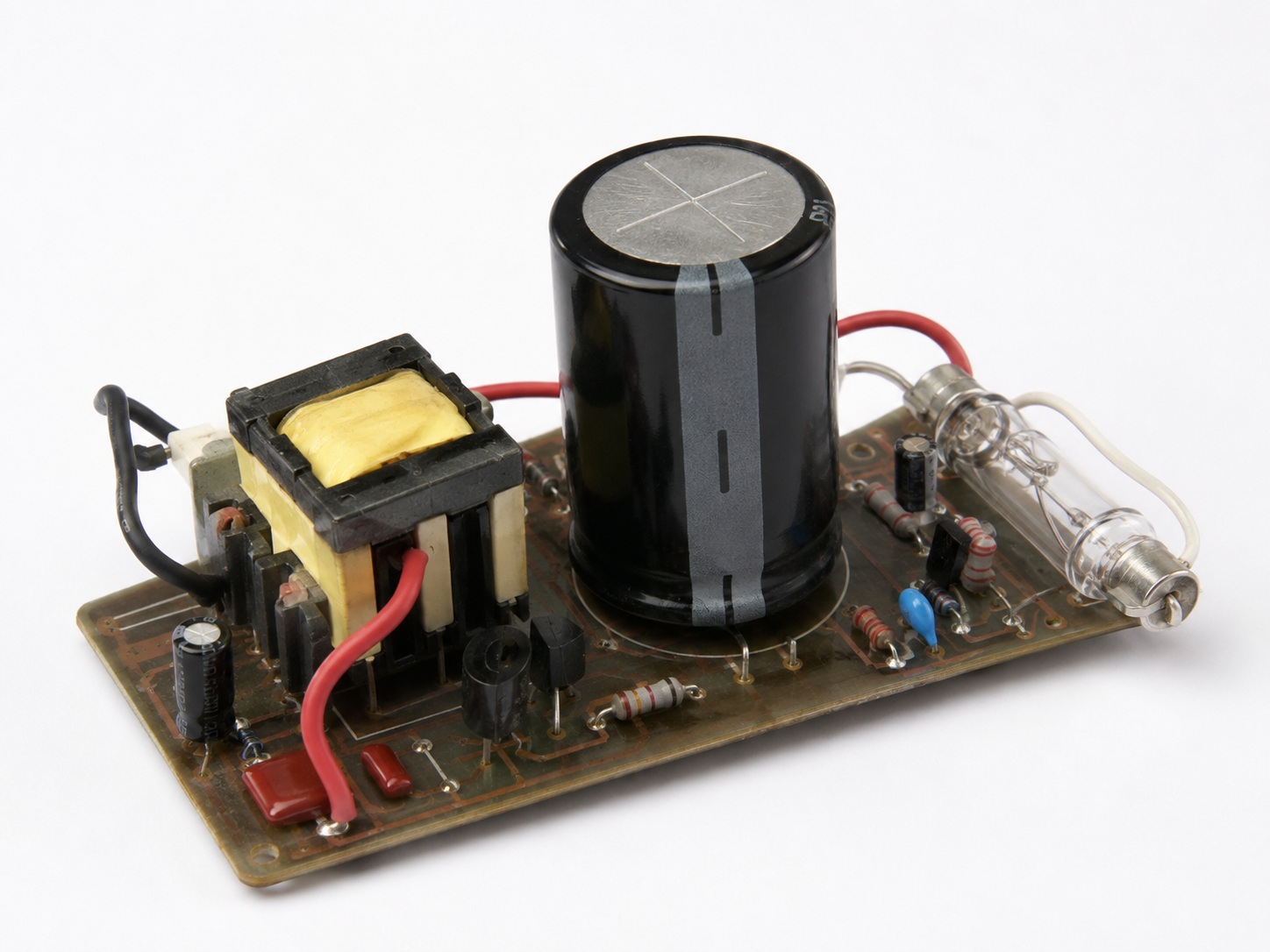
Camera Flash
Have you ever noticed how incredibly bright a camera flash is?
A small battery cannot deliver that much energy instantly.
Instead, the capacitor slowly stores energy and then releases it almost all at once into the flash tube.
That is what produces the powerful burst of light.
These examples demonstrate one important fact.
A capacitor is not a power source.
It simply stores electrical energy for a short time and releases it whenever the circuit needs it.
Experiment
Now let's perform a simple experiment to see how a capacitor works in practice.
You will need:
- a 3–5 V battery or a 5 V USB power supply,
- an LED,
- a 1 kΩ resistor,
- a 100 µF electrolytic capacitor,
- a few connecting wires.
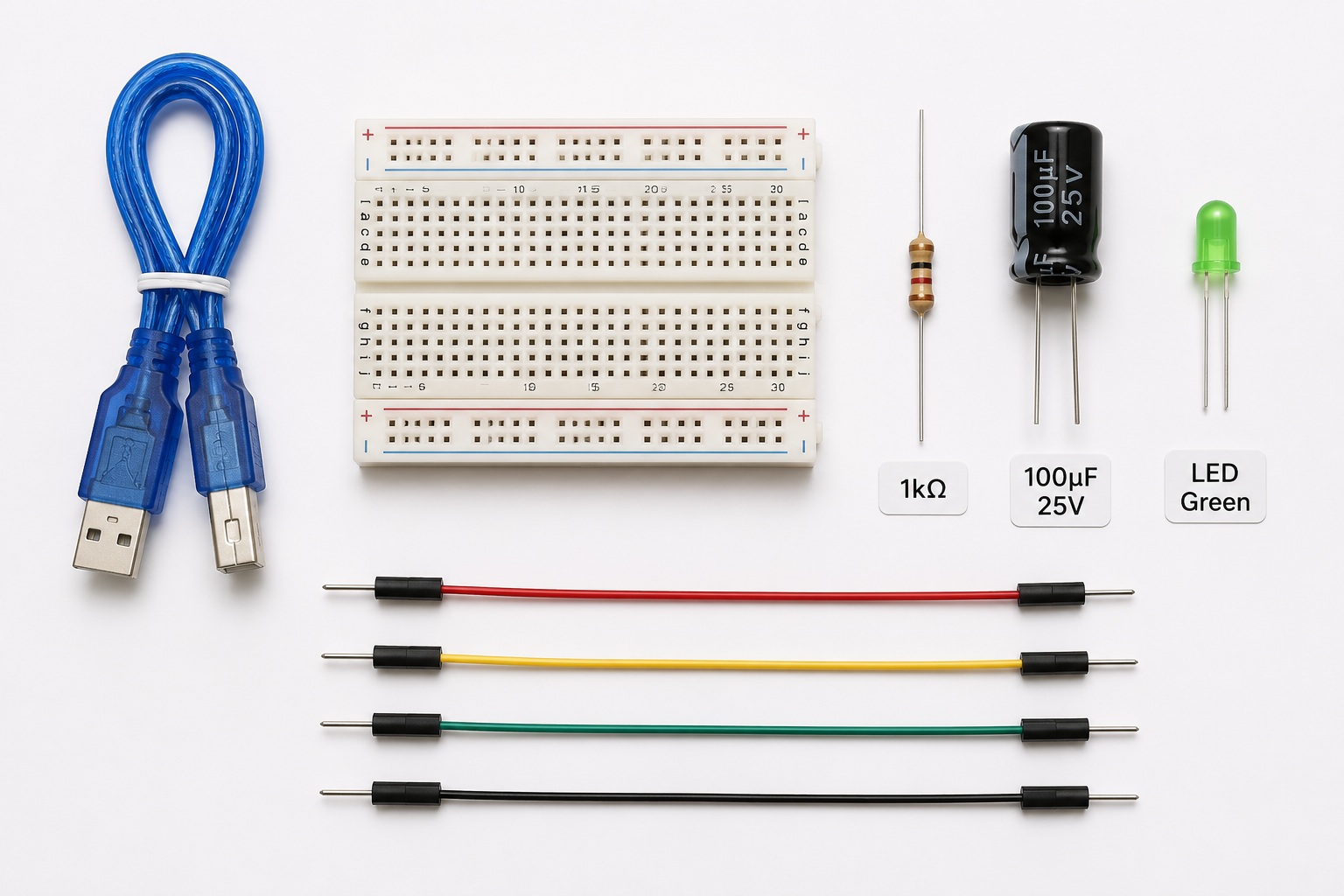
Connect the circuit so that the LED is connected through the resistor, while the capacitor is connected in parallel with the power supply.
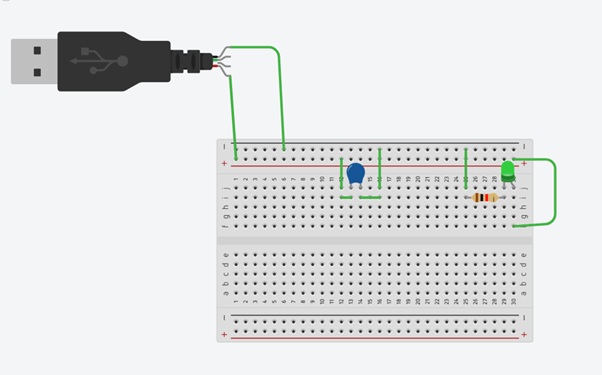
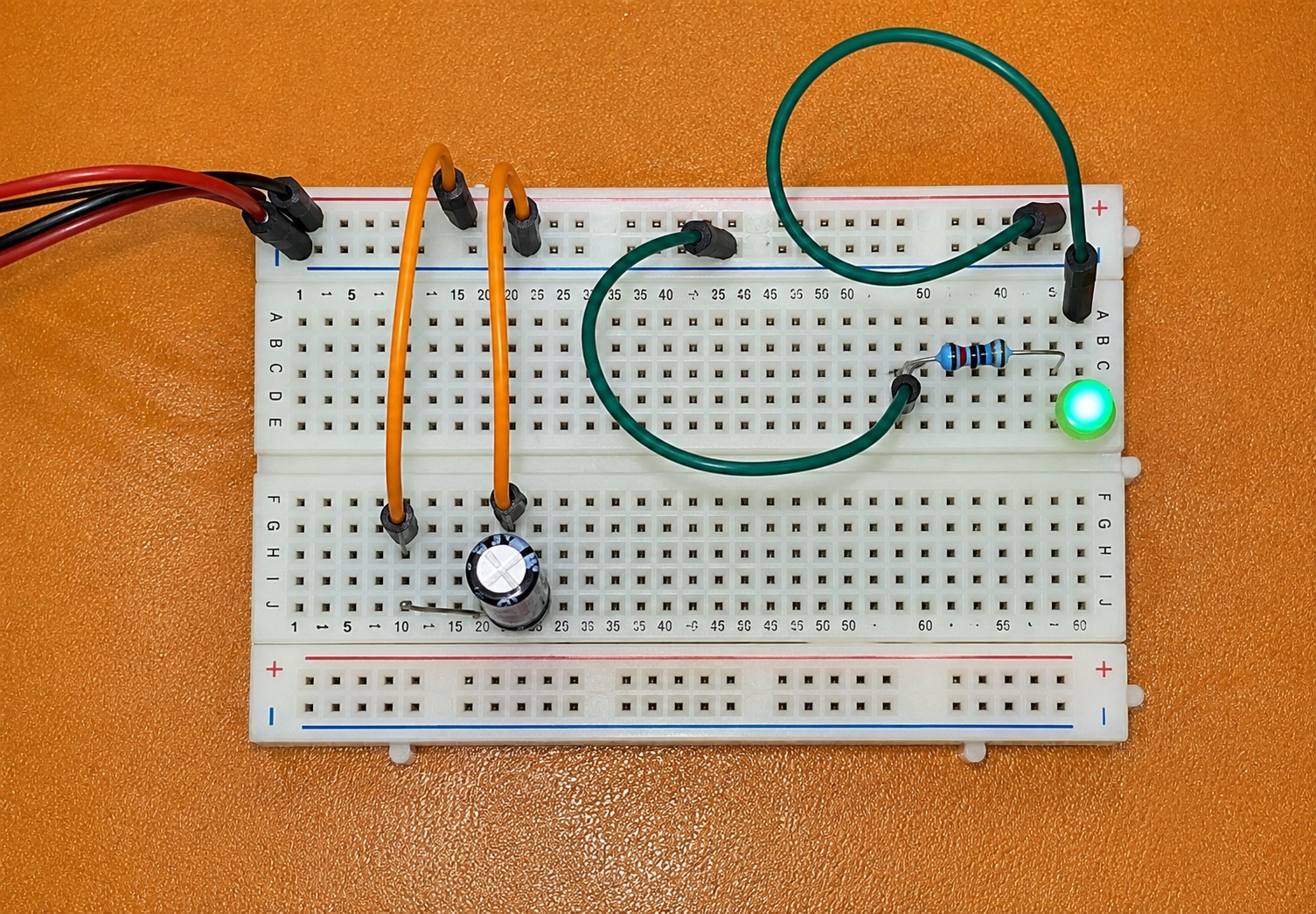
Now connect the power supply.
Two things will happen.
First, the LED will light up.
Second, the capacitor will begin charging.
Wait a few seconds.
Then disconnect the battery or power supply.
What happens next?
If everything is connected correctly, the LED will not turn off immediately.
Instead, it will continue glowing for a short time before gradually fading out.
This happens because, after the power source is disconnected, the LED is no longer powered by the battery.
Instead, it is powered by the energy stored inside the capacitor.
Once all of the stored energy has been released, the LED goes out.
Now repeat the experiment using capacitors with different capacitance values.
Start with 100 µF, then try 470 µF, and finally 1000 µF.
You will notice an interesting pattern.
The larger the capacitance, the longer the LED remains lit after the power has been disconnected.
This is one of the simplest experiments that clearly demonstrates how a capacitor stores and releases electrical energy.
Why Does This Happen?
During the experiment, you probably noticed something interesting.
After disconnecting the battery, the LED continued glowing for a few more seconds.
But where did the energy come from if the power source had already been disconnected?
The answer is simple.
While the battery was connected, the capacitor was gradually storing electrical energy.
Once the power was removed, it began releasing that stored energy back into the circuit.
That is why the LED did not turn off immediately.
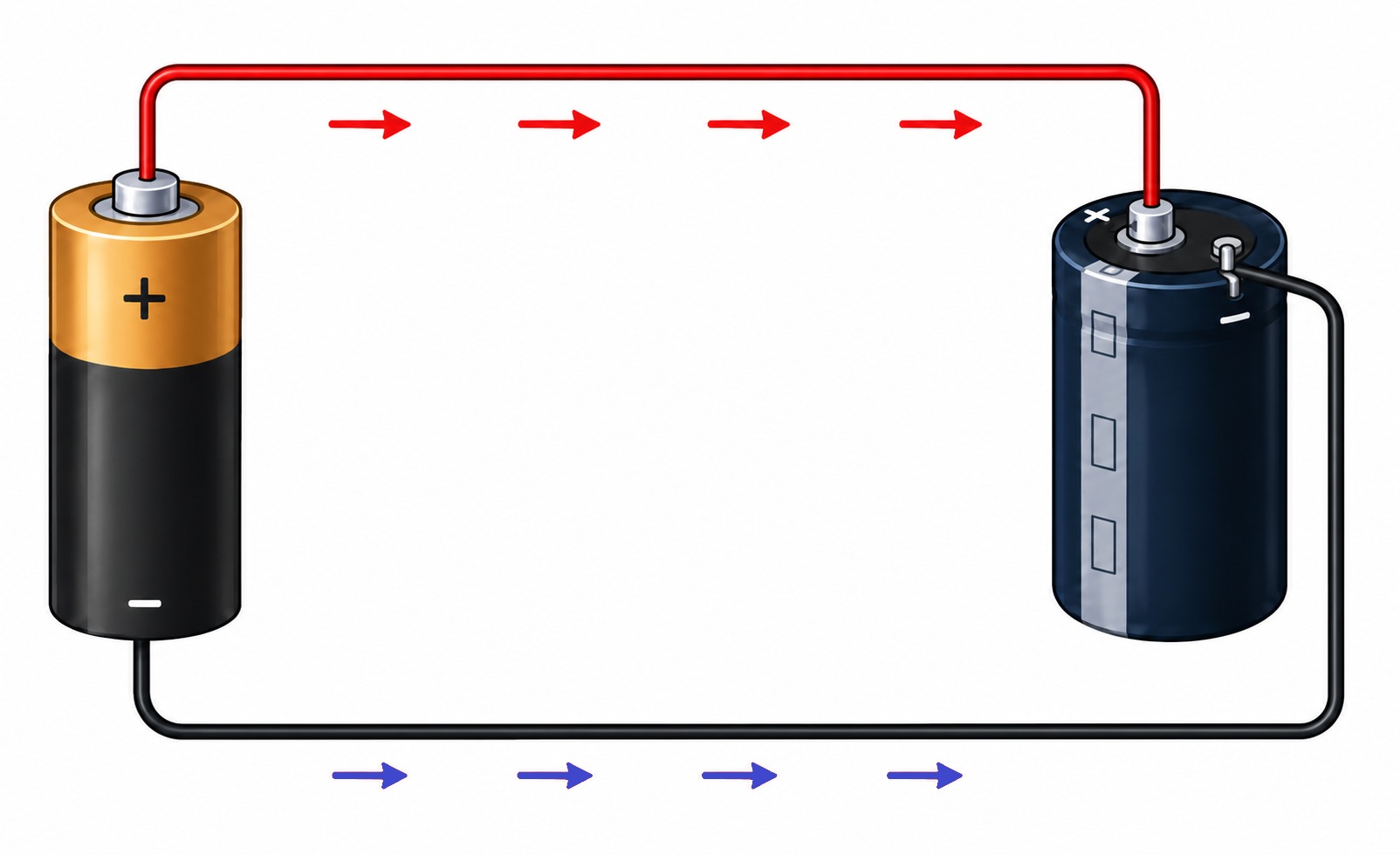
Charging a Capacitor
Imagine a small container being slowly filled with water.
As long as water continues flowing in, the container gradually fills up.
A capacitor behaves in a very similar way.
When it is connected to a power source, it begins storing electrical energy.
At first, the charging process happens quickly.
As the capacitor fills with energy, the charging rate gradually slows down.
Eventually, the capacitor becomes fully charged.
At that point, it draws almost no current from the circuit.
Discharging a Capacitor
Now imagine that the battery has been disconnected.
The energy stored inside the capacitor does not disappear instantly.
If a device, such as an LED, is still connected, the capacitor begins releasing its stored energy.
As the amount of stored energy decreases, less current flows through the circuit.
That is why the LED shines brightly at first, then gradually becomes dimmer until it finally turns off.
Why Do Larger Capacitors Last Longer?
During the experiment, you probably noticed another interesting result.
A 1000 µF capacitor kept the LED glowing much longer than a 100 µF capacitor.
The reason is straightforward.
A larger capacitor can store more electrical energy.
As a result, it takes longer to release all of that energy after the power source has been disconnected.
That is one of the reasons why power supplies often use electrolytic capacitors with relatively large capacitance values.
They help maintain a stable voltage, even during brief interruptions in the power supply.
What Does Capacitance Mean?
Every capacitor has its capacitance printed on its body.
For example:
- 100 µF
- 470 µF
- 1000 µF
This value is called capacitance.
The higher the capacitance, the more electrical energy the capacitor can store.
However, it is important to remember that higher capacitance does not mean higher voltage.
Capacitance only indicates how much electrical energy the capacitor is capable of storing.
That is why different electronic circuits use capacitors with different capacitance values.
Some applications only require a small ceramic capacitor, while others need a much larger electrolytic capacitor.
Common Beginner Mistakes
When working with capacitors, beginners often make a few common mistakes.
Understanding these mistakes will help you avoid damaging components and work more safely.
Mistake #1. Connecting the Polarity Incorrectly
This is the most common mistake.
If a polarized capacitor is connected backwards, it may become damaged.
Before turning on the power, always double-check which terminal is positive and which is negative.
Mistake #2. Choosing a Capacitor with an Insufficient Voltage Rating
Every capacitor is marked not only with its capacitance but also with its maximum voltage rating.
For example:
- 16 V,
- 25 V,
- 50 V,
- 100 V.
This value indicates the highest voltage the capacitor can safely withstand.
Applying a higher voltage may permanently damage the capacitor.
For this reason, it is good practice to choose a capacitor with some safety margin.
For example, if your circuit operates at 12 V, it is safer to use a capacitor rated for 16 V, 25 V, or 35 V than one rated for only 10 V.
Mistake #3. Discharging a Capacitor with a Screwdriver
Some capacitors can retain an electrical charge long after the power has been disconnected.
This is especially true for the large capacitors found in power supplies.
Beginners sometimes try to discharge them by shorting the terminals with a metal screwdriver.
This is not recommended.
A large capacitor can produce a powerful spark, which may damage both the capacitor and the tool.
A much safer method is to discharge the capacitor through a properly selected resistor.
Mistake #4. Assuming Every Capacitor Is Safe
Most capacitors used in simple electronic projects are completely safe to handle.
However, power supplies, televisions, microwave ovens, and other mains-powered devices may contain capacitors charged to several hundred volts.
Even after the device has been unplugged, these capacitors can still hold a dangerous electrical charge.
If you do not have experience repairing this type of equipment, it is best not to disassemble it yourself.
Summary
You have just learned about one of the most important components in electronics.
You now know that a capacitor can temporarily store electrical energy and release it back into a circuit when needed.
You have also learned how a capacitor is constructed, the most common types of capacitors, the difference between polarized and non-polarized capacitors, where they are used, and why an LED continues to glow for a short time after the power is disconnected.
Although capacitors come in many different shapes and sizes, they all operate according to the same basic principle.
Their ability to quickly store and release electrical energy makes them an essential part of almost every modern electronic device.
What's Next?
So far, we have looked at a capacitor as an individual electronic component.
However, its real potential becomes much more apparent when it works together with other components.
In the next article, you will learn about the RC circuit, one of the most important combinations of a resistor and a capacitor.
You will discover why a capacitor does not charge instantly, how RC circuits create time delays, smooth signals, and form simple electronic filters.
These principles are used in countless electronic devices, from simple blinking LED circuits to advanced digital electronics.
Key Takeaways
After reading this article, remember these important points:
- A capacitor temporarily stores electrical energy.
- It consists of two conductive plates separated by an insulating material called a dielectric.
- There are many different types of capacitors, but they all work according to the same basic principle.
- Polarized capacitors must always be connected with the correct polarity.
- The greater the capacitance, the more electrical energy a capacitor can store.
- Capacitors are used in almost every electronic device.
- Large capacitors in mains-powered equipment may retain a dangerous electrical charge even after the power has been disconnected.
You may also like:
🔧 visit the “Devices” section to see practical applications;
📘 continue learning in the “Education” section;
💬 ask questions or join the discussion on the Forum.