What is a resistor and why is it needed
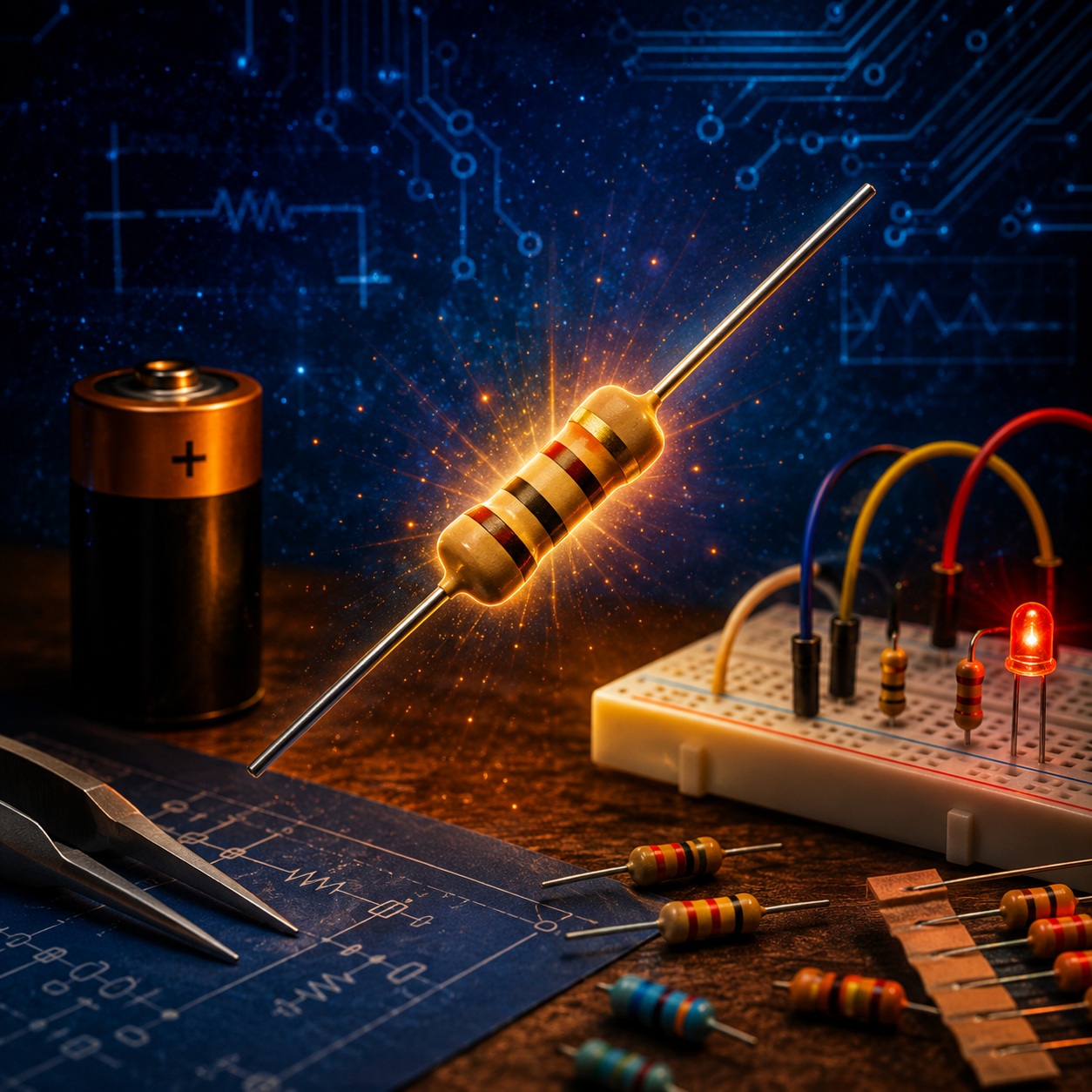
1. What we will do
In this lesson, we will get familiar with one of the most important electronic components — the resistor.
When people first start learning electronics, they often ask:
why do we even need a resistor?
After all, some components can work without one.
In reality, modern electronics would hardly exist without resistors.
They are used in:
- power supplies
- microcontrollers
- transistor circuits
- sensors
- voltage dividers
- control systems
If you open almost any electronic device, you will definitely find resistors inside.
2. What is a resistor
A resistor is an electronic component that creates resistance to electric current.
The main purpose of a resistor is to limit current and control voltage in an electrical circuit.
If some electronic components are connected directly to a power source, too much current may flow through them.
As a result, the component may:
- overheat
- start working incorrectly
- or become permanently damaged
A resistor helps prevent situations like this.
3. What is resistance
Every resistor has a certain resistance value.
Resistance shows how strongly a resistor opposes the flow of electric current.
Resistance is measured in:
Ohms (Ω)
A simple analogy
The operation of a resistor can be compared to a pipe carrying water.
- a wide pipe → water flows easily
- a narrow pipe → the flow becomes smaller
A similar thing happens in electronics:
the higher the resistance, the harder it is for electric current to flow through the circuit.
4. What is a resistor made of
A typical resistor consists of:
- a resistive material
- metal leads
- a protective body
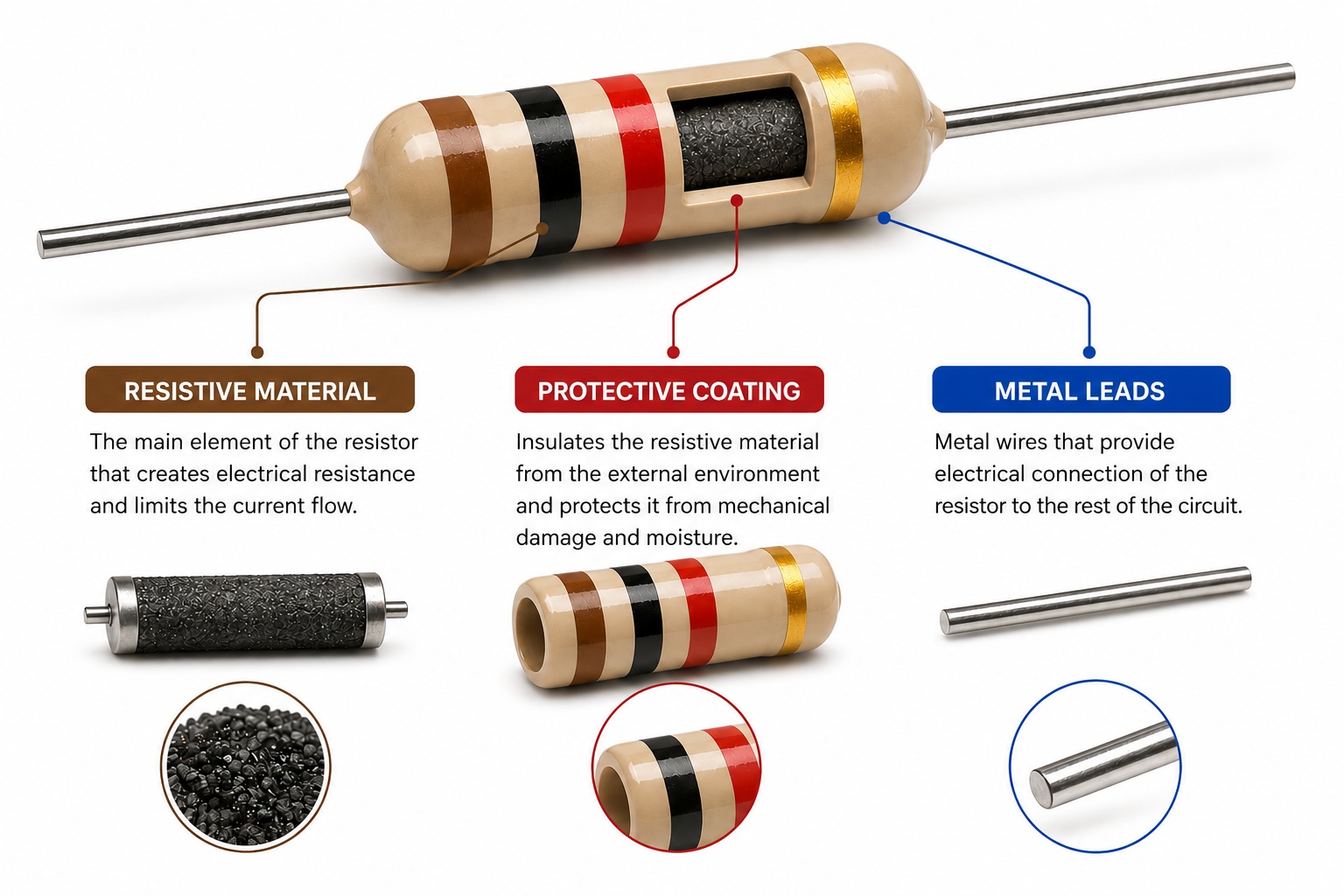
Depending on the type of resistor, its construction may vary slightly, but the operating principle remains the same.
5. Circuit symbols
In electronic diagrams, resistors are represented in several different ways.
European symbol
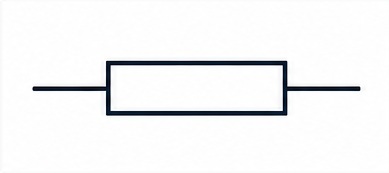
American symbol
Both versions are commonly used in electronics, so over time you will encounter them equally often.
6. Why resistors heat up
When electric current flows through a resistor, part of the energy is converted into heat.
That is why a resistor can become warm during operation.
If too much current flows through a small resistor:
❌ it starts overheating
❌ becomes dark
❌ may completely burn out
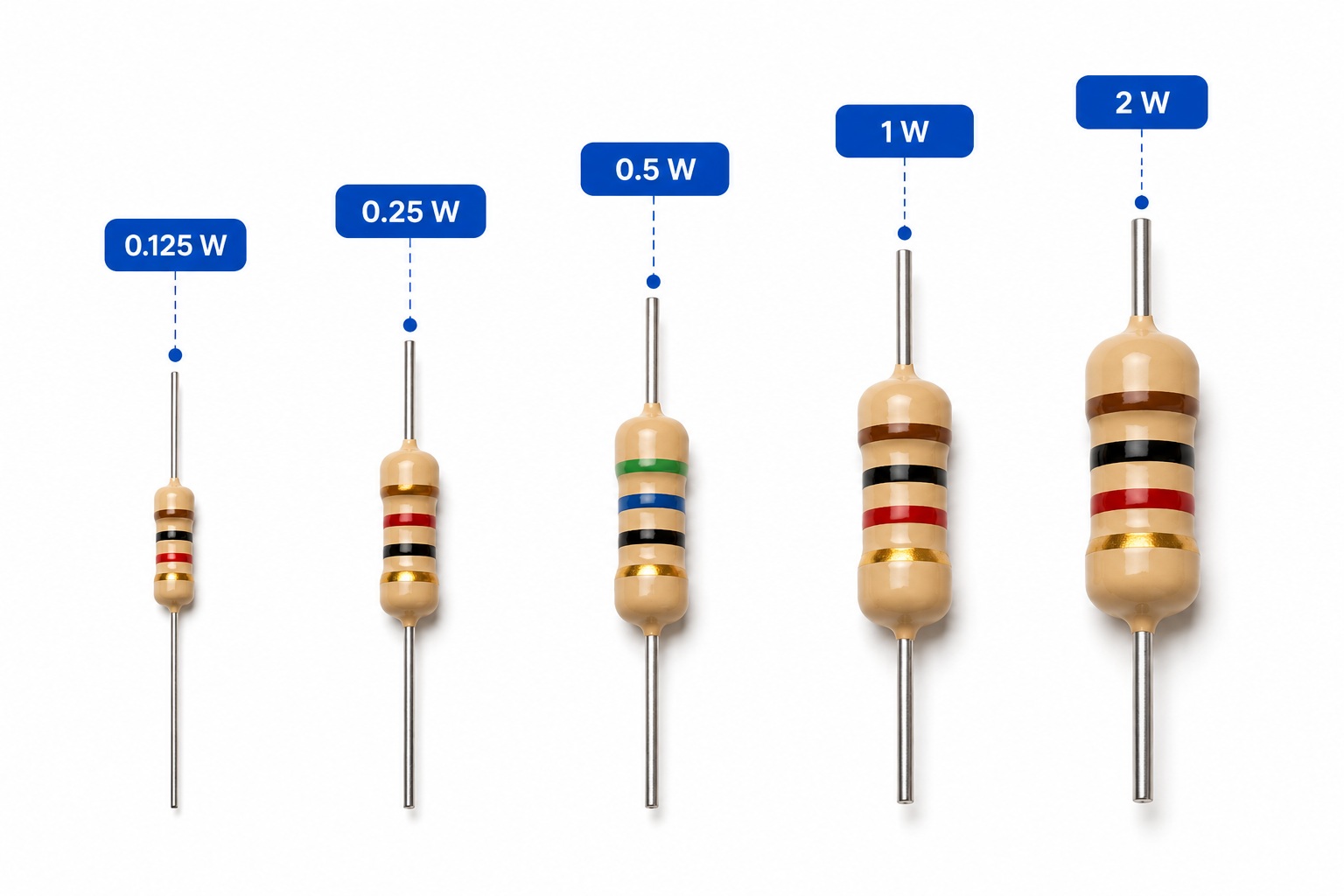
Resistor power rating
To ensure safe operation, manufacturers specify the maximum power rating of a resistor.
Popular values:
- 0.125 W
- 0.25 W
- 0.5 W
- 1 W
The higher the power rating, the physically larger the resistor usually is.
7. Color coding
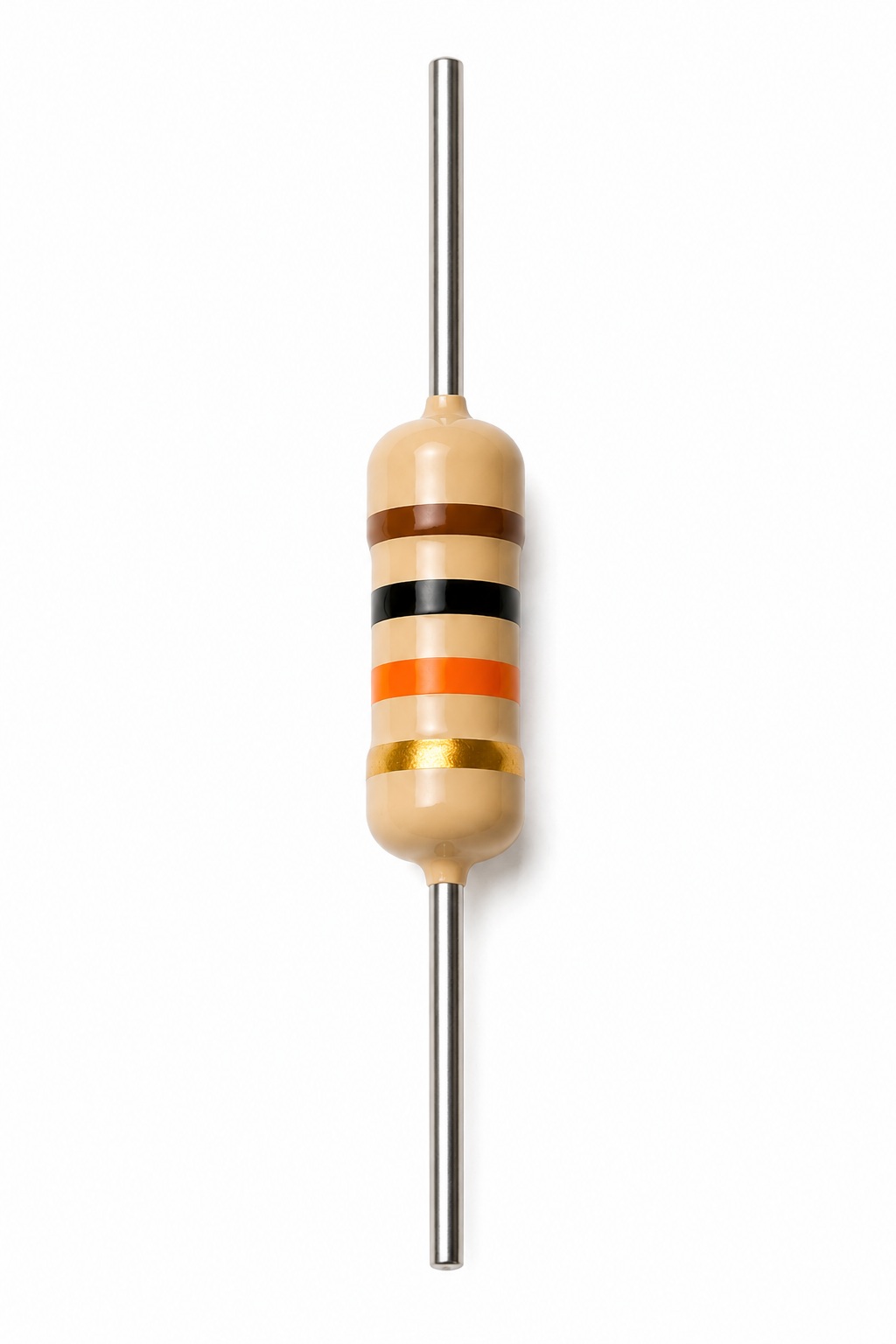
Most resistors have colored bands.
These bands indicate:
- resistance
- tolerance
- sometimes additional parameters
Why color bands are used
Resistors are usually very small.
Printing numbers on them would be inconvenient, so a color coding system is used instead.
Over time, you will learn how to determine the resistance value just by looking at the colors.
8. Where resistors are used
Resistors are used in almost all modern electronic devices.
For example:
- current limiting
- voltage dividers
- transistor protection
- buttons and sensors
- power supplies
- control circuits
Without resistors, most electronic devices would not work properly.
9. Variable resistors
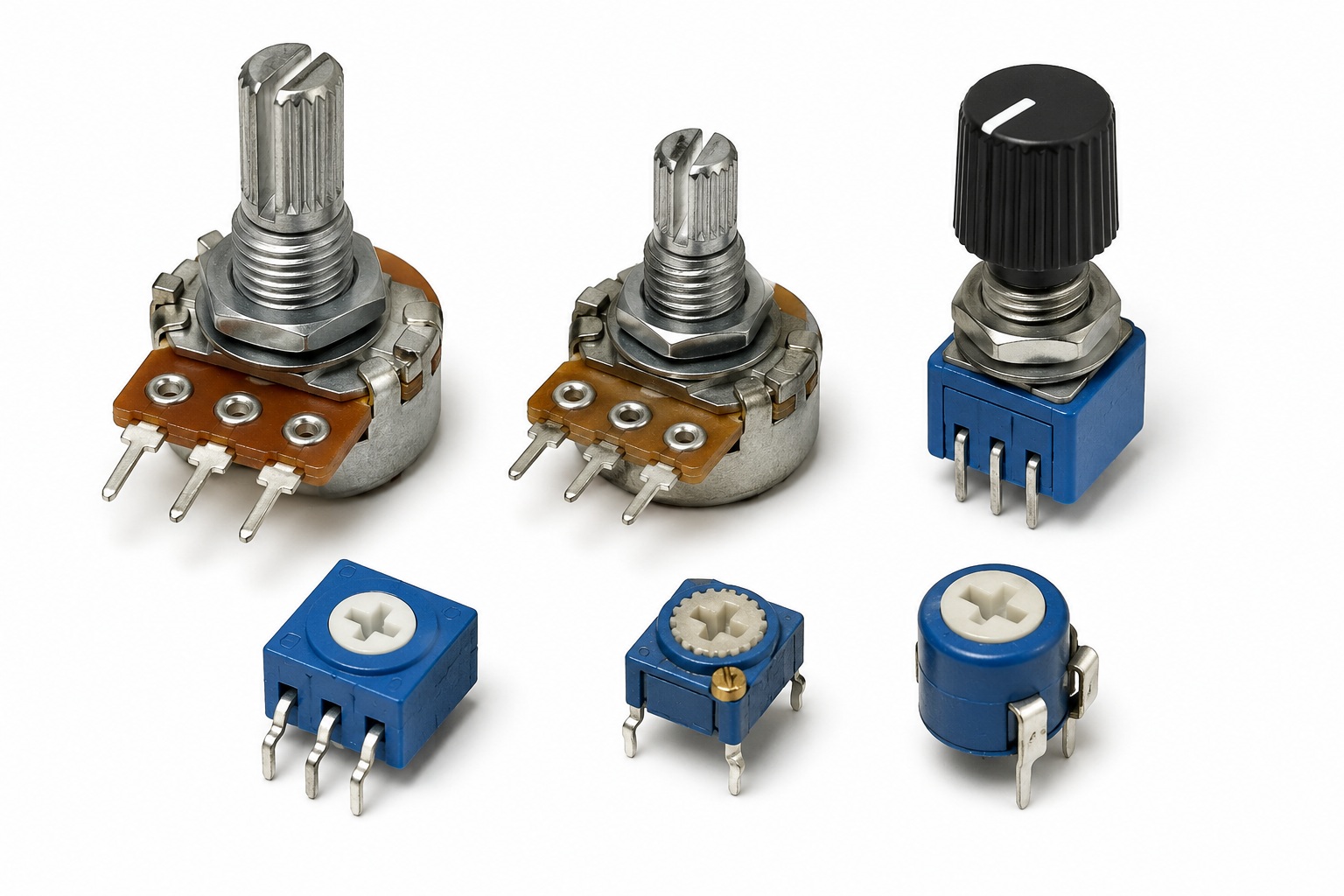
In addition to regular resistors, there are also variable resistors.
Their resistance can be changed manually.
Where variable resistors are used
If you have ever adjusted the volume on old speakers or changed brightness using a rotating knob, there was most likely a variable resistor inside.
Variable resistors are used for:
- volume control
- brightness adjustment
- voltage adjustment
- speed control
- sensor sensitivity adjustment
How a variable resistor works
Inside this type of resistor there is a resistive track and a movable contact.
When we rotate the knob:
- the contact moves
- the resistance changes
- the current or voltage in the circuit changes
That is why the device starts behaving differently.
Potentiometer
One of the most common types of variable resistors is called a:
Potentiometer
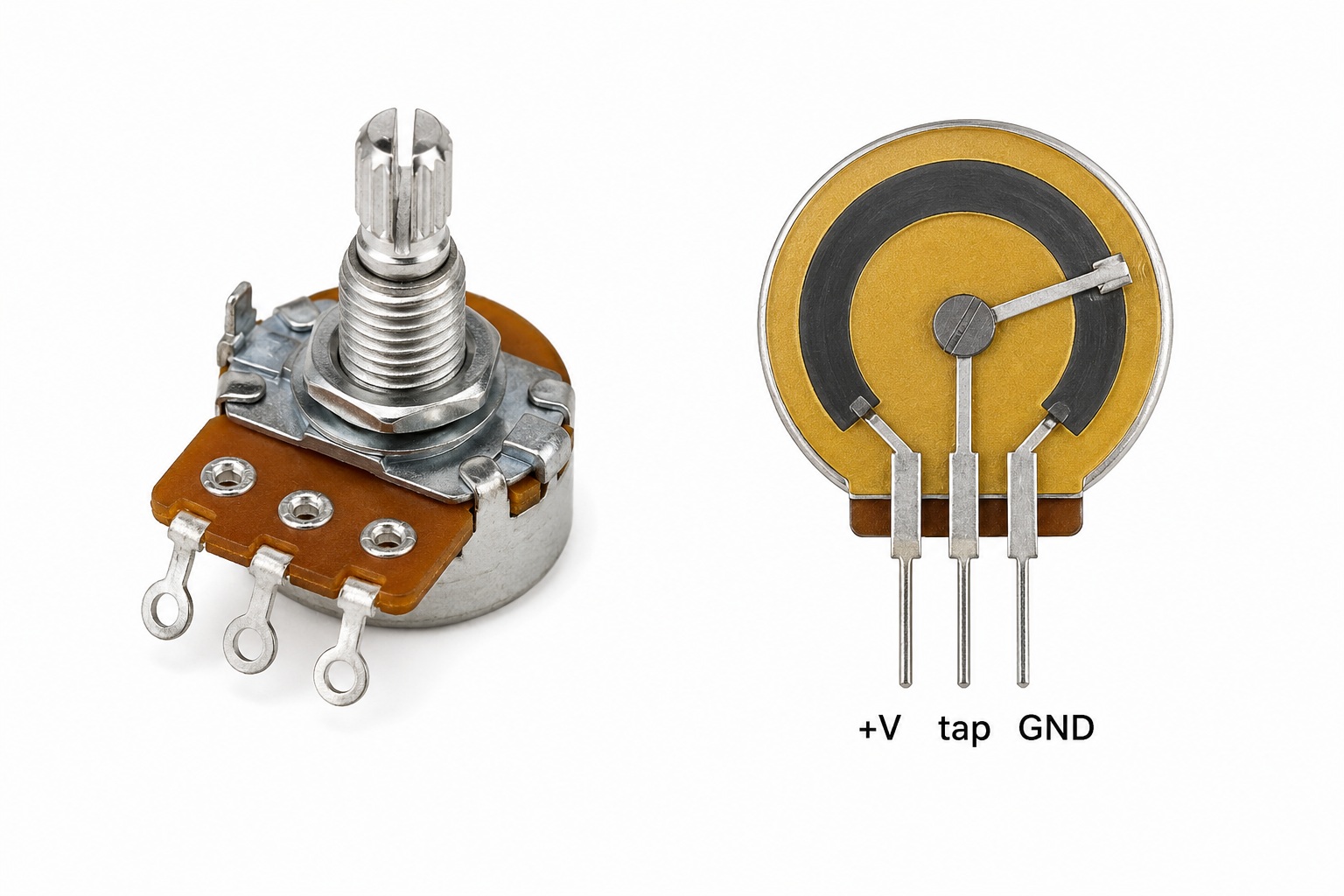
Potentiometers are very commonly used in:
- audio equipment
- power supplies
- brightness controllers
- various electronic devices
10. Voltage divider
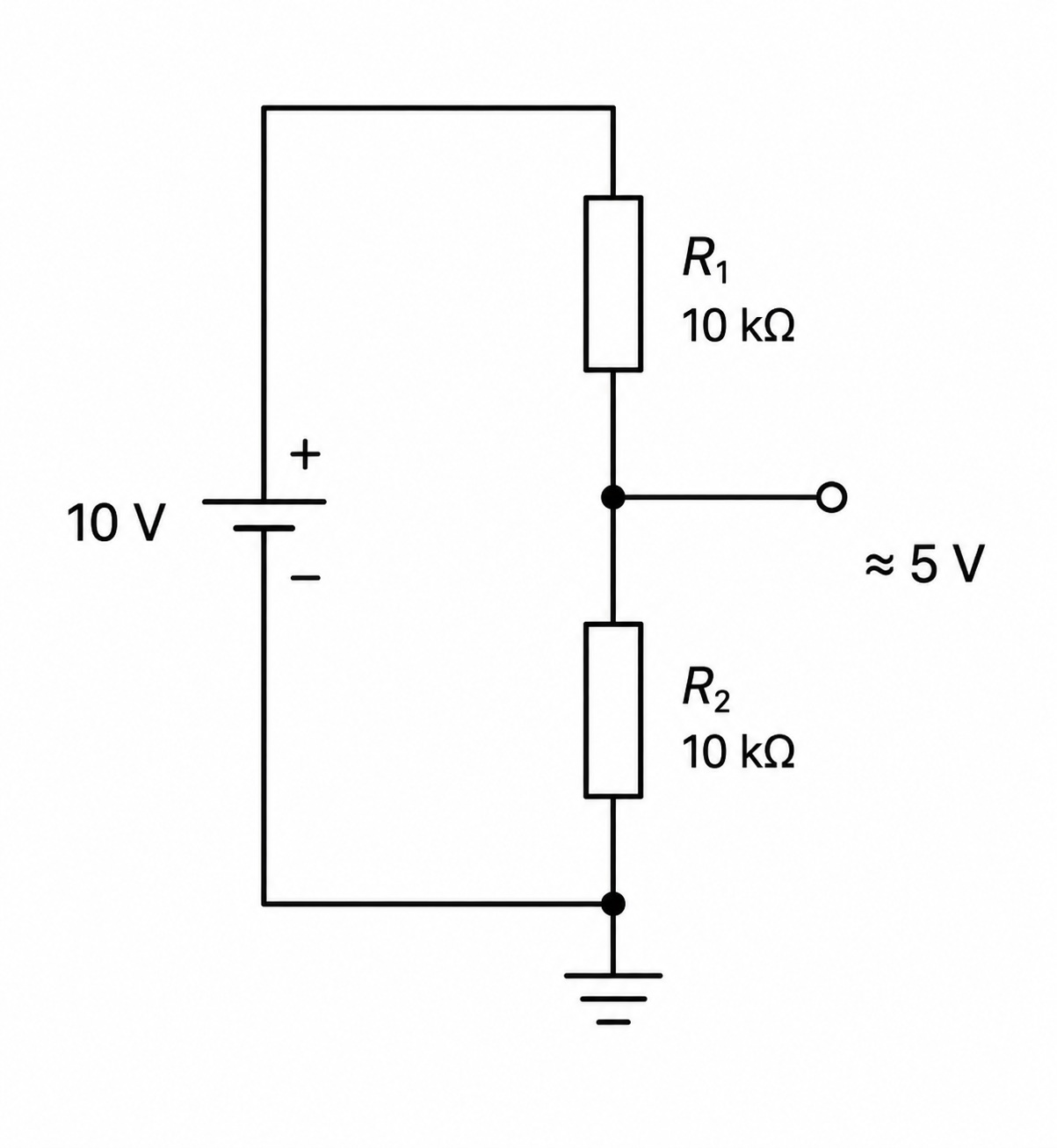
One of the most important applications of resistors is the voltage divider.
If two resistors are connected in a certain way, it is possible to obtain a different voltage.
For example:
- obtain approximately 5 V from 10 V
Where voltage dividers are used
Voltage dividers are used in:
- sensors
- microcontrollers
- measurement circuits
- analog inputs
- control systems
This is one of the most common circuit solutions in electronics.
11. Common beginner mistakes
❌ Resistors are only needed for LEDs
✔ In reality, resistors are used in almost all electronic circuits
❌ All resistors are the same
✔ They differ in resistance, power rating, and purpose
❌ The higher the resistance, the better
✔ Too much resistance can also interfere with circuit operation
Conclusion
Now you know:
- what a resistor is
- why it is needed
- what resistance means
- why resistors heat up
- where regular and variable resistors are used
A resistor is one of the most important components in any electronic circuit.
What’s next
In the next lesson, we will learn about LEDs and understand why a resistor is almost always required for proper LED operation.
You can also:
🔧 visit the “Devices” section to see practical applications;
📘 continue learning in the “Education” section;
💬 ask questions or join the discussion on the Forum.